Overview
At a glance
Is this game right for my group?
ABG editorial scores on a 1–5 scale.
Harder to teach
High replayability
Highly interactive
Scales well
Deep strategy
How it plays
How does it play?
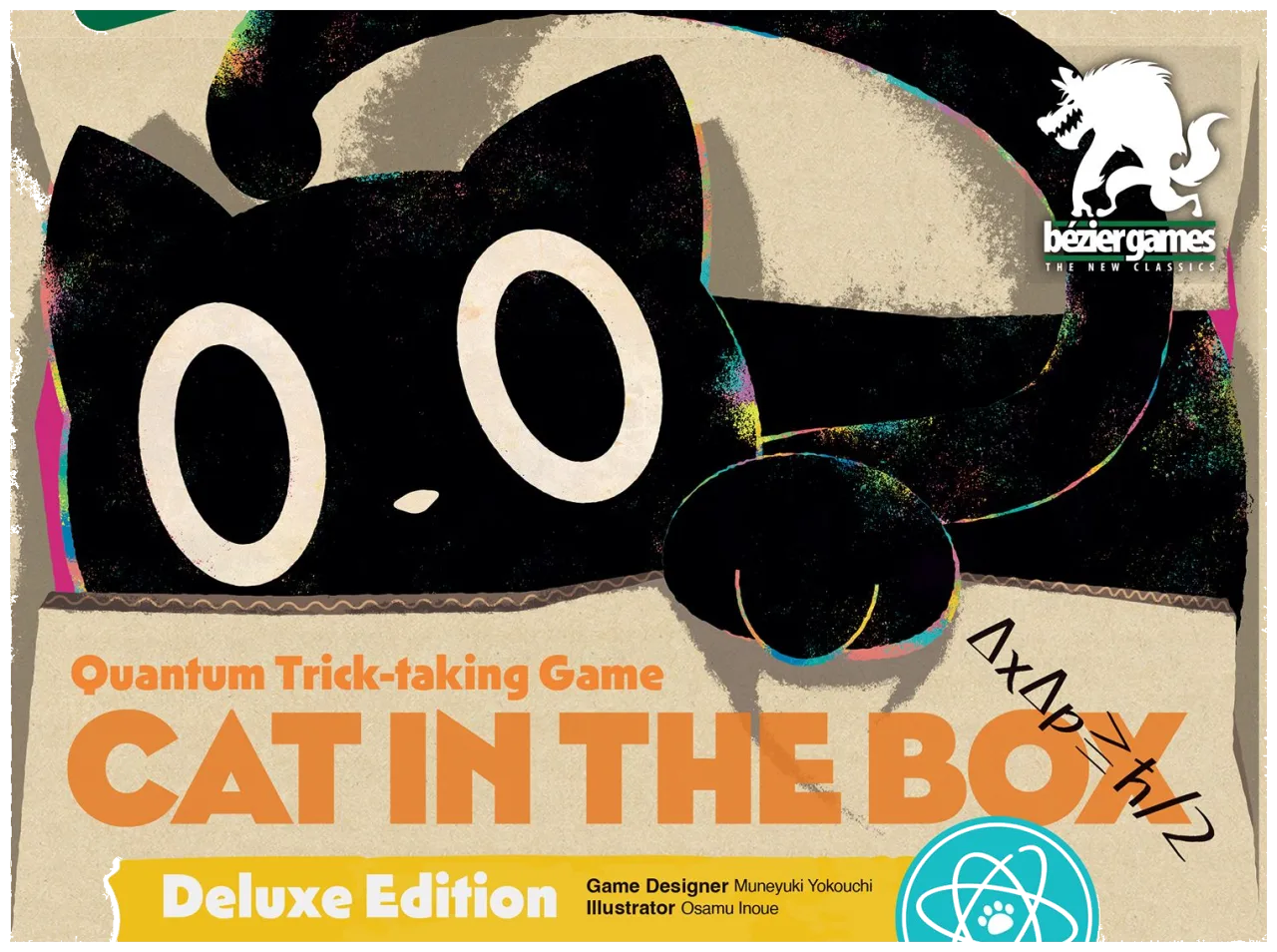
Cat Box is played with cards divided into quadrants each showing an empty box or one of five cats (in a box). Players take turns playing these cards to a shared display, overlapping previous cards by one or two quadrants.
Core mechanisms
Key systems that shape the decisions players make.
Pattern Building
Place elements to create arrangements that satisfy scoring or action patterns.
Enclosure
Surround spaces or pieces to claim territory, capture, or score.
Hand Management
Time and sequence a limited hand of cards to preserve future options.
Trick-taking
Play one card each and award the trick according to suit and rank rules.
Predictive Bid
Bid on how well you expect to perform, then try to meet that prediction.
Read the full game description
Cat Box is played with cards divided into quadrants each showing an empty box or one of five cats (in a box). Players take turns playing these cards to a shared display, overlapping previous cards by one or two quadrants. Each player is assigned a secret identity; if you are a cat you want as many of your cats showing at the end of the game as possible, and as large a group of them as possible, but if you are the chihuahua you want empty boxes and groups of exactly three cats. Players can play cards held by themselves or any of their opponents, but one side of the card is used when playing your own cards and the other (mirror image) side when playing other peoples'. The advanced game adds five single-use tokens for each player which have different effects.