Overview
At a glance
Is this game right for my group?
ABG editorial scores on a 1–5 scale.
Harder to teach
High replayability
Highly interactive
Scales well
Deep strategy
How it plays
How does it play?
Hatshepsut ruled as one of ancient Egypt’s greatest pharaohs. Her successors tried to erase her from history, threatened by her success as both a woman and a pharaoh.
Core mechanisms
Key systems that shape the decisions players make.
Open Drafting
Select cards or items from a shared face-up display.
Enclosure
Surround spaces or pieces to claim territory, capture, or score.
Simultaneous Action Selection
Choose actions secretly or concurrently before revealing them together.
Tile Placement
Place tiles to build a shared or personal spatial arrangement.
Solo / Solitaire Game
Provide rules and objectives designed for a single player.
Read the full game description
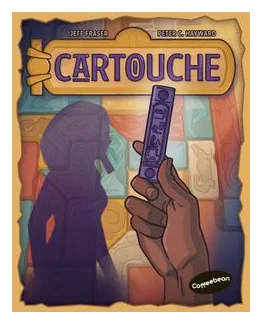
Hatshepsut ruled as one of ancient Egypt’s greatest pharaohs. Her successors tried to erase her from history, threatened by her success as both a woman and a pharaoh. They chiseled her image off stone walls, and her royal name — her cartouche – was removed from the murals. In Cartouche, you're an archeologist restoring Hatshepsut's legacy. The twist: In this tile-laying game, the spaces you don't cover are just as important as the ones you do. Each round, you'll draft tiles and arrange them to restore murals, complete stories, and earn points. The game is played over 10 rounds. Each round is split into 3 phases: Draft: *Players take turns drafting story cards and mural tiles Place: *Players simultaneously place tiles on their boards and complete any of their story cards Score: *Players simultaneously score for achievements The game ends after 10 rounds when the story deck runs out. The player who scores the most points from completed story cards and achievements wins.