Overview
At a glance
Is this game right for my group?
ABG editorial scores on a 1–5 scale.
Harder to teach
High replayability
Highly interactive
Scales well
Deep strategy
How it plays
How does it play?
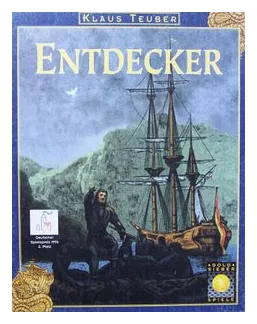
A boardgame based on a computer game (instead of the other way around) and designed by Klaus Teuber, Anno 1503 views the era of colonization strictly from the home country perspective.
Core mechanisms
Key systems that shape the decisions players make.
Read the full game description
A boardgame based on a computer game (instead of the other way around) and designed by Klaus Teuber, Anno 1503 views the era of colonization strictly from the home country perspective. Two to four players send ships to explore islands scattered about a 5 x 12 square ocean (the more players, the more islands). The settlement of the new lands is, however, strictly abstract. Each player's turn begins with the roll of one 6-sided die. A "6" is a random event (pirates, fire or good fortune - bad twice as often as lucky, and most likely to damage players who are doing well). On other results, each player gains a commodity from one of his five workshops. The player who rolled may then buy commodities from the bank, sell them to his colonists for gold (no trading among players), or use them in various combinations to recruit new colonists, promote existing ones, or build ships. After that, ships can sail for the unknown lands. Each island bears on its hidden side an outpost, a treasure or a trade agreement. After being discovered, these items are brought back to the home country (and the ship is removed from play, requiring the player to build a new one in order to keep searching). Outposts increase the productivity of workshops. Treasure yields either gold or free colonist promotions. Trade agreements reduce the gold needed to buy commodities from the bank. Besides being useful in these ways, outposts, gold and agreements are among the game's victory conditions. A player wins by being to first to attain three out of five objectives, namely, four outposts, 30 gold, three trade agreements, three colonists promoted to the top rank of "merchant" and the construction of four public buildings. The buildings (8 types, each bringing some advantage) cost nothing but don't become available until a player has recruited at least four colonists. After that, each new colonist adds a building (unless they've been preempted by other players; there aren't enough for everyone). Overall, the game falls squarely into the "simultaneous solitaire" category. Except in the race for islands, the players scarcely interact at all. They do, however, have a great many choices to make in the course of play.