ABG All Board Games
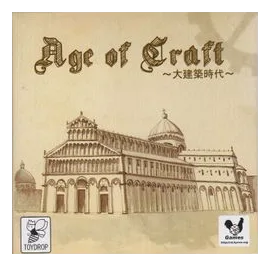
Age Of Craft box art

Age Of Craft

Players

2-4

Time

?-?

Age

10+

Weight

2

Rating

6.77

Fit

Teach 2.4

Teaching signal

Replay 4.1

High replayability

Interaction 3.7

Highly interactive

Scaling 4.4

Scales well

Strategy 4.5

Deep strategy

Control 3.5

More strategic control

Table feel

Age of Craft has a high level of direct confrontation and strategic depth in confrontation. Players need to frequently pay attention to and react to each other's strategies and turns. However, the game does not emphasize cooperation as much.

Replay value

Age of Craft has a high replayability score due to its high variability gameboard, impactful expansions, deep strategic possibilities, and good scalability. The game offers fresh experiences each time it is played, allowing players to discover new tactics and strategies. The presence of expansions adds new content and gameplay elements, enhancing the replay value. The game adapts well to different player counts without compromising its appeal or balance. While it may take some time to learn, the depth it offers makes it worth the effort.

Luck profile

Age of Craft has a moderate level of luck involved in the game. Random elements such as dice rolls or card draws have a notable but not exclusive impact on the game outcome. However, players have substantial ability to mitigate the effects of randomness through strategic decisions and planning. The game outcome is primarily determined by player strategy and decisions, with luck playing a minor role. Overall, Age of Craft strikes a good balance between luck and strategy, making it an engaging and enjoyable board game.

Overview

Age of Craft is a combination resource management and tableau building game in which dice are drafted and traded among players as each seeks to build the best city. A set of six types of basic cards providing resource production and victory points is combined with a set of seven types of randomly chosen action cards to form a supply. Each card represents a type of building that the players may add to their cities. The active player rolls three dice, chooses one number to keep, then passes the remaining dice clockwise for other players to select. The active player may then negotiate with opponents to trade dice, in order to build up certain combinations of numbers, which represent different kinds of resources. These combinations are then spent to purchase cards to be added to the player's tableau. The game ends either when one player reaches a total of 20 points or when the last "Mercantile House" card in the supply is purchased. The player with the most points wins.
Editions

Edition Year Language Publisher / Region
No editions imported yet.

Files

No files imported yet.

Commerce

No commerce mappings imported yet.

Credits

Designers

1
Toryo Hojo

Publishers

2
Chicken Dice Games (??????????) Southern Cross Games (??????????)