Overview
At a glance
Is this game right for my group?
ABG editorial scores on a 1–5 scale.
Harder to teach
High replayability
Highly interactive
Scales well
Deep strategy
How it plays
How does it play?
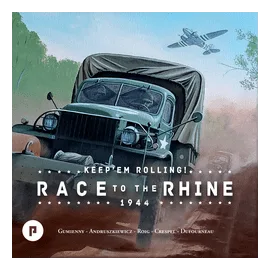
Not enough gas, not enough ammo or not enough time. Not enough to cross the Rhine before the enemy closes all the gaps.
Core mechanisms
Key systems that shape the decisions players make.
Action Points
Spend a limited allowance of points across several possible actions each turn.
Movement Points
Spend a movement allowance across spaces with different costs.
Dice Rolling
Roll dice to introduce uncertainty into actions, production, movement, or resolution.
Network and Route Building
Create connected routes that improve reach, delivery, control, or scoring.
Pick Up and Deliver
Collect goods at one location and transport them to another for rewards.
Read the full game description
Not enough gas, not enough ammo or not enough time. Not enough to cross the Rhine before the enemy closes all the gaps. You need to form the bridgehead before others do. That’s the only way to Victory and your personal glory. 1944 Race to the Rhine is a new game experience. You can’t win this game without proper planning. Your tanks need gas to move and ammo to fight. But don’t forget to feed your GIs. So what would be your transport priority? Will you follow General Patton’s strategy to discard ammo in order to bring additional fuel barrels along to move boldly forward? Would you risk your prestige and gamble on Market-Garden as Field Marshal Montgomery did? Would you cross the Rhine more quickly than General Bradley did, with the help of your hard work and a little luck? “In preparing for battle I have always found that plans are useless, but planning is indispensable” (General Dwight D. Eisenhower, Supreme Commander of the Allied Forces in Europe). So, how are you planning your Victory?