Overview
At a glance
Is this game right for my group?
ABG editorial scores on a 1–5 scale.
Harder to teach
High replayability
Highly interactive
Scales well
Deep strategy
How it plays
How does it play?
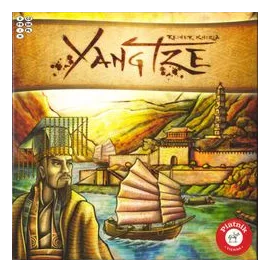
In Yangtze, players are distributors on the Yangtze River, with each trying to make the most money there. On a turn, a player can take two actions, first selling one or more bundles of goods, then possibly purchasing a commodity.
Core mechanisms
Key systems that shape the decisions players make.
Read the full game description
In Yangtze, players are distributors on the Yangtze River, with each trying to make the most money there. On a turn, a player can take two actions, first selling one or more bundles of goods, then possibly purchasing a commodity. Goods on the Yangtze become cheaper and cheaper the further that they drift towards Shanghai. Whoever can wait a long time gets a chance to buy goods at a bargain price — assuming that another trader doesn't snatch those goods away first! Players don't need to rely solely on trade, however. They can also establish business branches that give them advantages during play, in addition to the half-dozen special cards that every player holds at the start of play.