Overview
At a glance
Is this game right for my group?
ABG editorial scores on a 1–5 scale.
Harder to teach
High replayability
Highly interactive
Scales well
Deep strategy
How it plays
How does it play?
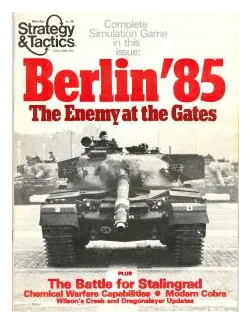
It's the summer of 1985 and Soviet tanks stream into West Germany. Thinly spread NATO forces strive to delay the red hordes until reinforcements arrive, and the world watches anxiously, dreading the nuclear weapons held in each super power's arsenal.
Core mechanisms
Key systems that shape the decisions players make.
Grid Movement
Move pieces between adjacent spaces on a regular grid.
Dice Rolling
Roll dice to introduce uncertainty into actions, production, movement, or resolution.
Chit-Pull System
Draw tokens to determine which units, factions, or events activate next.
Line of Sight
Visibility between pieces determines valid targets, movement, or effects.
Simulation
Model a real or imagined system through detailed cause-and-effect rules.
Hexagon Grid
Use a hexagonal map where each space connects evenly in six directions.
Read the full game description
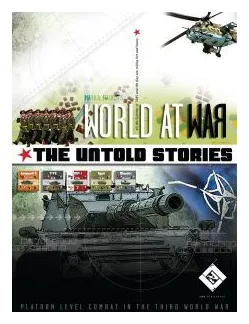
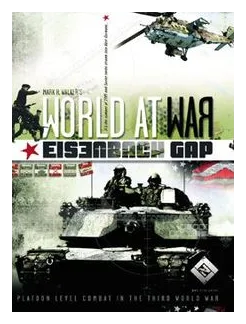
It's the summer of 1985 and Soviet tanks stream into West Germany. Thinly spread NATO forces strive to delay the red hordes until reinforcements arrive, and the world watches anxiously, dreading the nuclear weapons held in each super power's arsenal. Welcome to the dark world of Mark H. Walker's Award Winning World at War series. A platoon level simulation that stresses command, control, and war's unpredictable nature, World At War is an engaging, tactical action game. The rules cover self-propelled mortars, thin-skinned vehicles, support weapons, ranged combat, opportunity fire, ATGM depletion, assault and overrun combat. Better still, World at War is not just a game, but also a game system. Learn Eisenbach Gap, and you can play any of the follow-on modules. Reimplemented by Eisenbach Gap Deluxe which also includes Death of the 1st Panzer.