Overview
At a glance
Is this game right for my group?
ABG editorial scores on a 1–5 scale.
Harder to teach
High replayability
Low interaction
Scales well
Deep strategy
How it plays
How does it play?
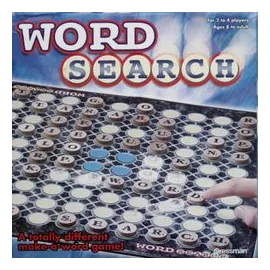
Wordsearch - for 2 to 4 players Ages 8 and up COMPONENTS Wordsearch gameboard and 96 wood letter tiles SETUP Randomly place the letter tiles, face up on every gray circle. The four red circles in the center of the board are left empty.
Core mechanisms
Key systems that shape the decisions players make.
Read the full game description
Wordsearch - for 2 to 4 players Ages 8 and up COMPONENTS Wordsearch gameboard and 96 wood letter tiles SETUP Randomly place the letter tiles, face up on every gray circle. The four red circles in the center of the board are left empty. Choose a player to go first. Score with paper and pencil (not included) PLAYING The active player slides one or more letters to make a word according to the following rules: A) Each letter must be moved in a straight line - horizontally, vertically or diagonally - one or more spaces. A letter must not jump over another letter or change directions. B) Each letter MUST form part of the word being made. A letter may not be moved out of the way to let another letter through. C) The word formed may include letters which the players has not moved. D) The word formed may read forwards or backwards, horizontally, vertically, or diagonally. E) Only one word may be formed or scored on a turn. SCORING After forming the word, players add up the values of the letters in the word formed and multiply by the number of letters in the word.