Overview
At a glance
Is this game right for my group?
ABG editorial scores on a 1–5 scale.
Harder to teach
High replayability
Highly interactive
Scales well
Deep strategy
How it plays
How does it play?
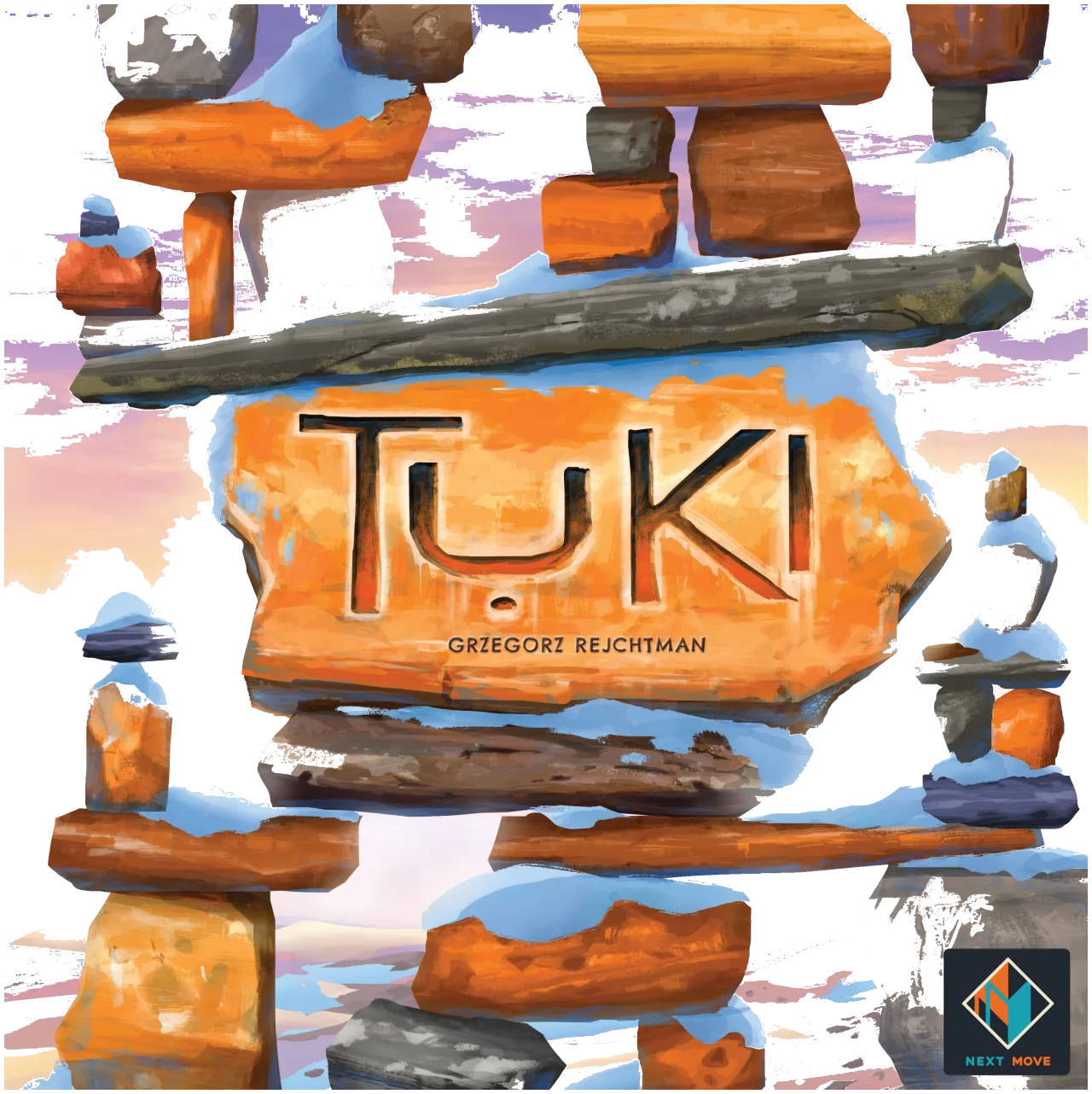
In the Inuit language, "tukilik" is used to define an object that carries a message, and the northern landscapes are densely populated with such objects.
Core mechanisms
Key systems that shape the decisions players make.
Pattern Building
Place elements to create arrangements that satisfy scoring or action patterns.
Dice Rolling
Roll dice to introduce uncertainty into actions, production, movement, or resolution.
Pattern Recognition
Identify recurring visual, spatial, or logical arrangements.
Player Elimination
Players can be removed from contention before the game ends.
Finale Ending
End the game when a specific timing or state condition is reached.
Read the full game description
In the Inuit language, "tukilik" is used to define an object that carries a message, and the northern landscapes are densely populated with such objects. The most well known of these are the inukshuk, that is, structures of rough stones traditionally used by Inuit people as a landmark or commemorative sign, with the stones often being stacked in the form of a human figure. During each turn in Tuki, you attempt to construct an inukshuk based on the die face rolled using your stones and blocks of snow. Players have only a limited number of pieces with which to construct the inukshuk, so you'll need to be creative and use the three-dimensional pieces in multiple ways, such as to counterbalance other pieces or even build on top of existing pieces. A solution always exists — you just need to discover it! You can choose from two levels of difficulty when playing Tuki to level the playing ground between newcomers and experts. Be swift, yet precise, and transform your stones into messengers of the north...