Overview
At a glance
Is this game right for my group?
ABG editorial scores on a 1–5 scale.
Harder to teach
High replayability
Highly interactive
Scales well
Deep strategy
How it plays
How does it play?
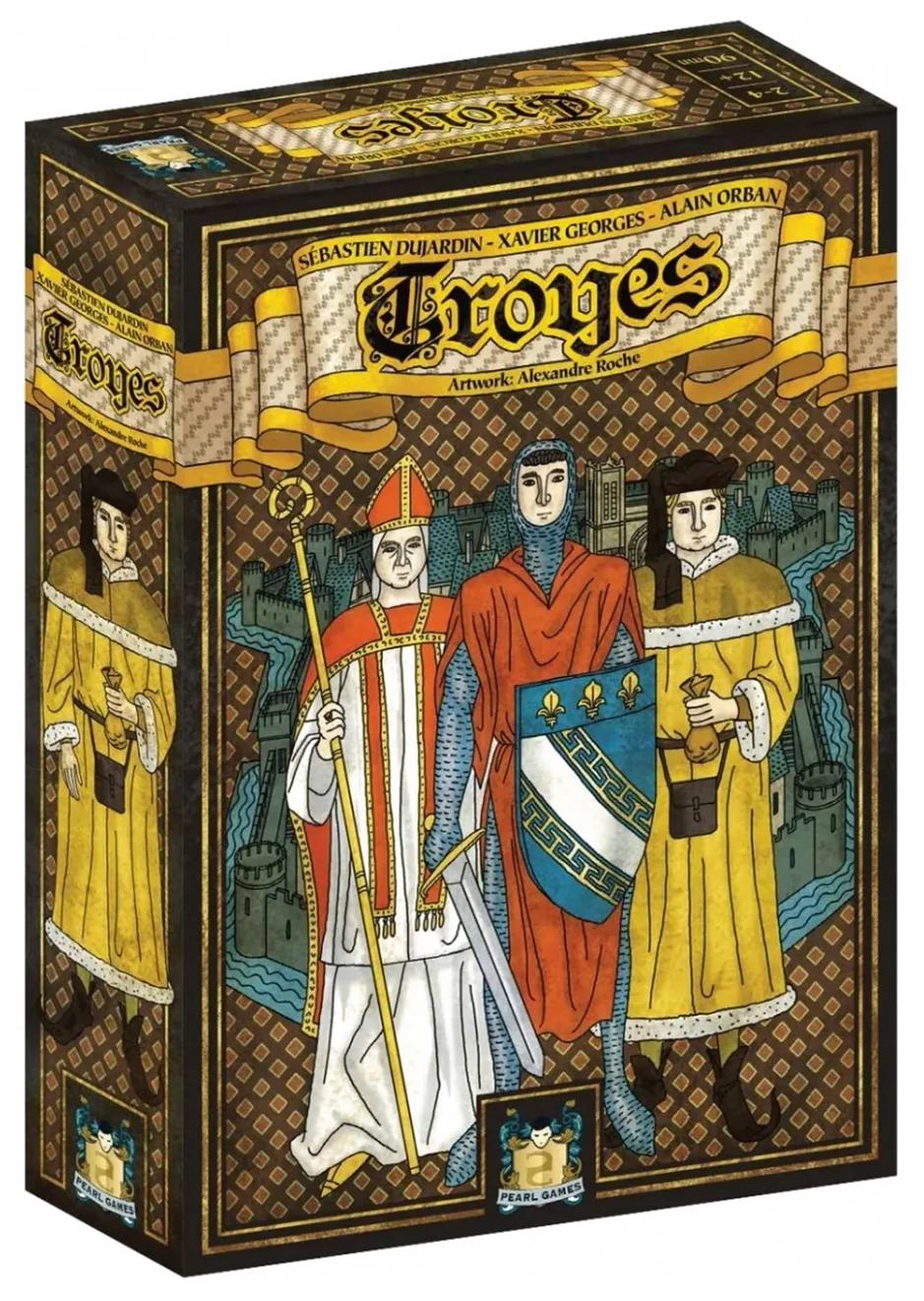
In Troyes (pronounced "troah"), players recreate four centuries of history of this famous city of the Champagne region of France.
Core mechanisms
Key systems that shape the decisions players make.
Area Majority
Compete to have the strongest presence in areas that award control or points.
Dice Rolling
Roll dice to introduce uncertainty into actions, production, movement, or resolution.
End Game Bonuses
Earn additional points for meeting conditions evaluated when the game ends.
Hidden Victory Points
Some scores remain concealed until a reveal or the end of the game.
Events
Triggered events alter the shared state, rules, or available choices.
Read the full game description
In Troyes (pronounced "troah"), players recreate four centuries of history of this famous city of the Champagne region of France. Each player manages their segment of the population (represented by a horde of dice) and their hand of cards, which represent the three primary domains of the city: religious, military, and civil. Players can also offer cash to their opponents' populace in order to get a little moonlighting out of them — anything for more fame! Make your underlings: work on the cathedral combat misfortune bustle about the city and other such tasks that are below your family's stature ••• Many editions of Troyes released in 2016 or later include rules for a solo variant as well as four bonus cards originally released in 2011 as a promotional item. Versions released prior to this date contain rules only for games with 2-4 players.