Overview
At a glance
Is this game right for my group?
ABG editorial scores on a 1–5 scale.
Harder to teach
High replayability
Highly interactive
Scales well
Deep strategy
How it plays
How does it play?
Linked game discovered from BGG. Full scrape pending.
Core mechanisms
Key systems that shape the decisions players make.
Read the full game description
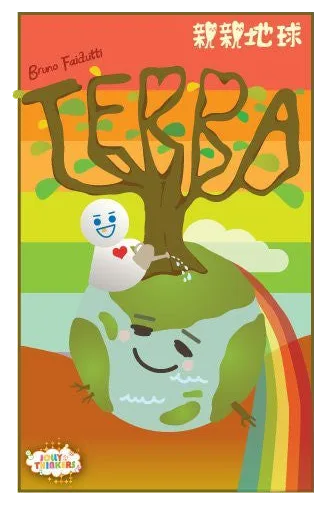
Game description from the publisher: How long is the Golden Gate Bridge? Where has “evidence" of the Yeti been found? How many sculptures are on Easter Island? It‘s likely that you don‘t know any of these facts. But you might have a rough idea, and that‘s good enough because Terra is the party game where being close counts. And if you have absolutely no idea what the answer is? Take advantage of your friends who do know! Terra is a redesign of Friedemann’s 2009 SDJ-nominated FAUNA, which had similar mechanics, but was specific to animals. Terra changes the subject matter to general geographic information, includes a brand new Imperial measurements map side (retaining the Metric map side for gamers outside the U.S.), has 300 topics (with three categories of questions) on oversized cards, and simplifies the scoring. Terra plays in 45 minutes for 2-6 players. (End of publisher's description.) Terra is a trivia game with cards that ask three related questions, such as "where was the Woodstock music festival?", "what year did it take place?" and "how many people attended it?" A card is selected, and players take turns guessing the answers to the questions by putting tokens on the board in different areas, such as on a map of the world, a time line, or a number line indicating the number of people (as in the example). Points are scored for correct answers, but some points are also scored for close answers. Whoever has the most points after a predetermined number of rounds wins the game.