Overview
At a glance
Is this game right for my group?
ABG editorial scores on a 1–5 scale.
Harder to teach
High replayability
Highly interactive
Scales well
Deep strategy
How it plays
How does it play?
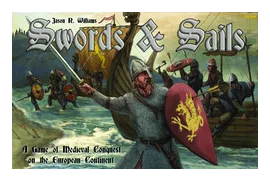
The year is 1000 C.E., the middle of the medieval period. The European continent is constantly at war as competing political factions try to control Europe through military might and political intrigue.
Core mechanisms
Key systems that shape the decisions players make.
Area Majority
Compete to have the strongest presence in areas that award control or points.
Area Movement
Move pieces between connected regions rather than along individual spaces.
Simultaneous Action Selection
Choose actions secretly or concurrently before revealing them together.
Secret Unit Deployment
Place or assign units secretly before their positions are revealed.
Read the full game description
The year is 1000 C.E., the middle of the medieval period. The European continent is constantly at war as competing political factions try to control Europe through military might and political intrigue. In Swords & Sails, players control one of these factions in a bid to conquer Europe. Build armies and fleets, build more cities, make and break alliances, spy on your opponents, and go to war to conquer all of Europe. Players have up to five armies and fleets to move and attack with on a large 38x28 inch map of Europe which accurately depicts Europe in 1000 C.E. Each army can contain six types of combat units: Knights, Heavy Cavalry, Light Cavalry, Heavy Infantry, Light Infantry or Peasant troops. Fleets can contain warships, Raider ships, or Transports for moving your armies. Every season you can build more units into your armies or fleets to have a better chance of capturing more territories. More cities can also be built to increase income without the need to capture territory. Combat occurs between armies by using a unique combat system that gives a feel of your troops lining up on the battle field and facing off. The system uses 2d6 to determine outcomes. Will the Byzantine Empire rise again and give rebirth to the glory and ancestors of Ancient Rome? Can the upstart Kievan Rus Empire bring a new golden age of Slavic Culture and power? Or will the Fatimid Caliphate push further into Europe and create an even greater Muslim Empire?