Overview
At a glance
Is this game right for my group?
ABG editorial scores on a 1–5 scale.
Harder to teach
High replayability
Highly interactive
Scales well
Deep strategy
How it plays
How does it play?
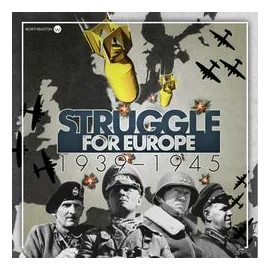
STRUGGLE FOR EUROPE 1939-1945 is a fast-paced, light, two-player, card-driven strategy wargame set in Europe during World War II that allows you to re-fight the entire struggle for Europe at a strategic level in under two hours.
Core mechanisms
Key systems that shape the decisions players make.
Read the full game description
STRUGGLE FOR EUROPE 1939-1945 is a fast-paced, light, two-player, card-driven strategy wargame set in Europe during World War II that allows you to re-fight the entire struggle for Europe at a strategic level in under two hours. The game starts in 1939 with the Axis player poised to expand rapidly against the Allies (the Polish, French, and British). Which way to go and who to attack are the early decisions. Can they capture enough to win the game before the first reshuffle. Game play uses point-to-point movement and area control, hidden army strengths, and decks of cards providing the command choices; there are no dice. The Axis and Allied players each have their own card decks, reflecting the relative strengths and weaknesses of both sides. Each player will have the chance to be the aggressor and defender trying to win the game by the time they have cycled through their card deck for the last time. Victory is achieved by having accumulated the required amount of victory points by capturing victory locations. As the decks are cycled, the Allied player adds some better quality cards, with the Russians and Americans entering play during the 1st and 2nd reshuffle. The Axis player adds will burn through his early game quality cards, becoming weaker as his resources dwindle. The underlying game mechanism is one of "deck destruction" rather than the more normal deck-building. Cards have multiple uses and can be recycled if used one way but during the course of the game you have to decide which cards are going to be permanently sacrificed from your deck cycle to allow you to build units. Game Components: Mounted Game Board 2 - Decks of 60+ cards 3/4" counters Rules Box -description from designer