Overview
At a glance
Is this game right for my group?
ABG editorial scores on a 1–5 scale.
Harder to teach
High replayability
Highly interactive
Player-count sensitive
Deep strategy
More strategic control
How it plays
How does it play?
Command an overwhelming invading army or a desperate castle defence in an asymmetric siege where every enemy action gives the walls time to answer.
Core mechanisms
Key systems that shape the decisions players make.
Action Points
Spend a limited allowance of points across several possible actions each turn.
Point-to-Point Movement
Move along explicit connections between named locations or nodes.
Team-Based Game
Players compete in fixed teams and coordinate toward a shared team result.
Area Majority
Compete to have the strongest presence in areas that award control or points.
Variable Player Powers
Each player has different abilities, restrictions, or strategic advantages.
Read the full game description
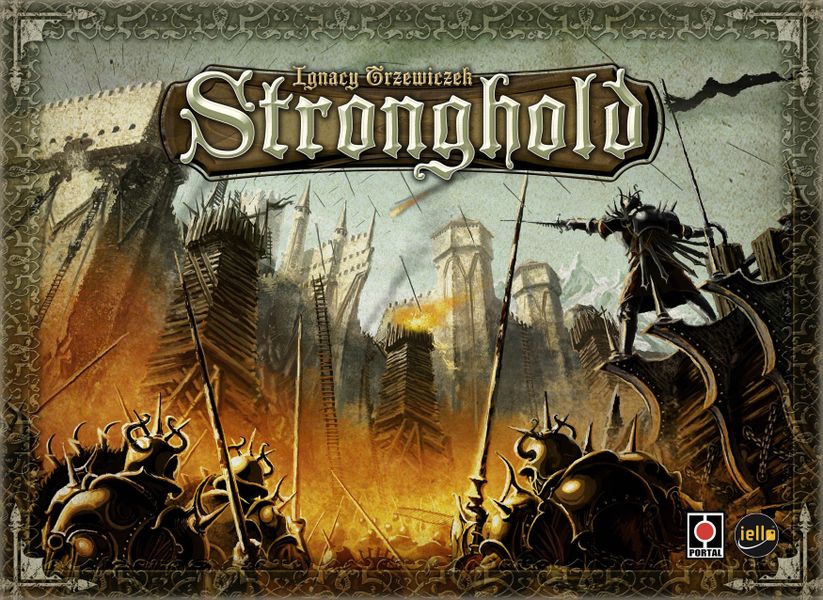
Stronghold is an asymmetric siege game in which one side commands a seemingly endless army of goblins, orcs, and trolls while the other attempts to keep a fortress standing. Each turn the invader receives units and distributes them among phase cards to build siege engines, train specialists, perform rituals, equip troops, and advance along the approaches. Every committed unit also generates time for the defender. That time is the castle’s action currency, spent on soldiers, wall repairs, cannons, traps, cauldrons, orders, and other preparations. The two economies therefore remain locked together: the invader can create a devastating assault only by giving the defender opportunities to answer it. Fighting resolves at wall sections where strength, fortifications, heroes, machines, and special actions compete; breaches let attackers enter, while an intact defence continues to earn glory points as the siege drags on. The invader must decide where to concentrate a huge but unwieldy force, and the defender must identify which apparent threats are feints before scarce soldiers are misplaced. The original edition supports two opposing sides and optional team play for up to four participants. Victory compares the timing and severity of the breach against the glory accumulated by the defenders.