Overview
At a glance
Is this game right for my group?
ABG editorial scores on a 1–5 scale.
Harder to teach
High replayability
Highly interactive
Scales well
Deep strategy
How it plays
How does it play?
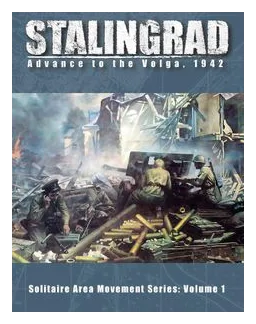
Stalingrad Advance to the Volga, 1942 puts the player in charge of the attacking and far more mobile German side while the game system handles the defending and largely static Soviet side. No two games will ever be the same.
Core mechanisms
Key systems that shape the decisions players make.
Read the full game description
Stalingrad Advance to the Volga, 1942 puts the player in charge of the attacking and far more mobile German side while the game system handles the defending and largely static Soviet side. No two games will ever be the same. Each turn represents new and unique challenges for the player in the form of random events, uncertain supply deliveries and unknown Soviet area strength and defensive strategies.