Overview
At a glance
Is this game right for my group?
ABG editorial scores on a 1–5 scale.
Harder to teach
High replayability
Highly interactive
Scales well
Deep strategy
How it plays
How does it play?
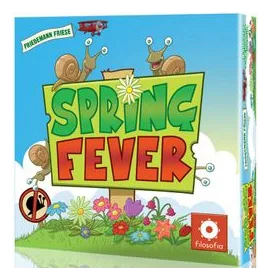
Spring is here! Flowers are blooming and everyone is marveling at the majestic spectacle of Nature.
Core mechanisms
Key systems that shape the decisions players make.
Read the full game description
Spring is here! Flowers are blooming and everyone is marveling at the majestic spectacle of Nature. Soon enough, you find yourself digging holes in the ground and planting seeds of every kind. But in the shadow of these stems, hungry snails are waiting, ready to dash towards your precious labor and have their fill of your little paradise. Will you be able to avoid this disaster? In Spring Fever, players are planting flowers in their gardens while trying to avoid the snails that will eat these blooms. The card deck consists of a deck of cards with flowers (valued at 3) and snails (valued -1 to -10). The first player draws four cards, lays what he claims is the lowest valued card face-up in front of him, then passes the cards to the left. The next player can either: • Accept this player's claim, in which case she draws a card to bring the hand back up to four cards, then takes a turn herself, claiming one card, etc. • Or call the previous player's bluff by revealing the three cards she was passed. If the previous player lied, he must take all the snails in the three cards revealed; in addition the doubting player can hand over her largest snail or take a flower card. If the previous player told the truth, the penalties are reversed. In either case, the doubting player will take the next turn by filling her hand to four cards, choosing one card, etc. The game ends when a player can't refill the hand to four cards. This player takes the lowest card remaining, then everyone tallies their points. The player with the highest total wins, with the number of flowers being the tiebreaker, if needed.