Overview
At a glance
Is this game right for my group?
ABG editorial scores on a 1–5 scale.
Harder to teach
High replayability
Highly interactive
Scales well
Deep strategy
How it plays
How does it play?
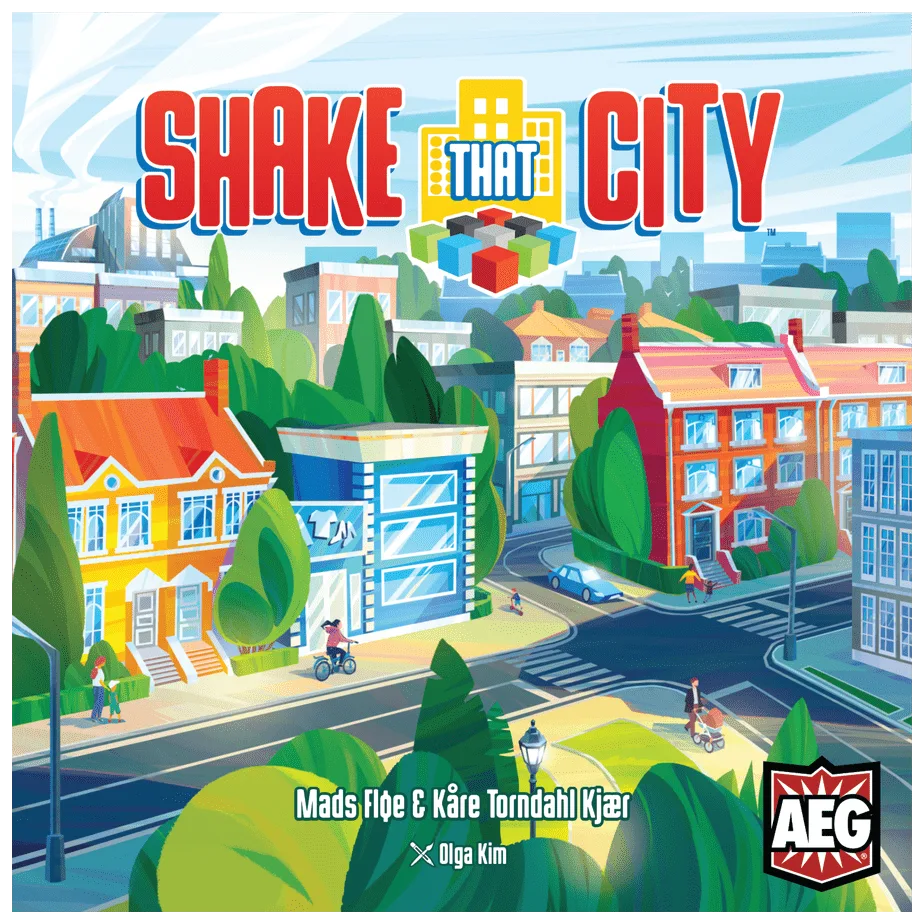
Welcome, city planners! Design the best city block using patterns from the new and exciting "Cube Shaker".
Core mechanisms
Key systems that shape the decisions players make.
Pattern Building
Place elements to create arrangements that satisfy scoring or action patterns.
Tile Placement
Place tiles to build a shared or personal spatial arrangement.
Bingo
Mark matching results on a personal grid and complete required patterns.
Grid Coverage
Place pieces to cover required cells or patterns on a grid.
Variable Set-up
Starting conditions, resources, or layouts change between plays.
Read the full game description
Welcome, city planners! Design the best city block using patterns from the new and exciting "Cube Shaker". You'll place a mix of tiles to help grow the thriving city. The best design wins the game! Shake That City is a family puzzly tile-laying game for 1-4 players, that plays under an hour! The game is played over a series of rounds. The active player shakes the Cube Shaker and presses its slider to reveal a 3x3 pattern, based on which they need to place the corresponding building tiles of a single color of their choice on their board. The building tiles correspond to roads, factories, shops, parks and of course, homes. The other players then pick any building color other than the one the active player picked, then place matching colored tiles in the matching pattern on their board. Players earn points for tile-placement combinations and for the completed bonus point tiles around the edge of their board. • Roads wants to connect to an edge of the board. • Factories wants to be next to other factories and roads. • Homes want to be placed in clusters that are as small as possible — the smallest being a single tile — so long as they're not next to a factory. • Parks wants to be next to homes and factories. • Shops score increasingly more the closer they are placed to the city center, but if they're not placed on an edge, they need to be adjacent to a road connected to the board's edge in order to score. Without road access, you'll have no products to sell! At game's end, players earn points for tile-placement combinations and for the completed bonus point tiles around the edge of their board.