Table feel
Seven Dragons has a high level of direct confrontation and strategic depth in confrontation. Players need to frequently pay attention to and react to each other's actions. However, there is limited emphasis on cooperation in the game.
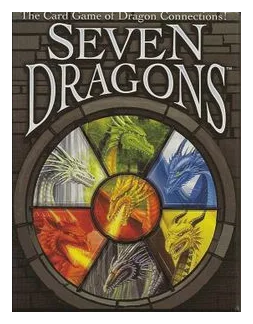
In Seven Dragons, players start with a secret goal color from the seven colored dragons and a hand of three cards. The Silver Dragon is laid on the table as the starting card; at this stage it is a wild card. The playing cards feature domino-like colored panels in the same manner...
Players
2-5
Time
10-30
Age
6+
Weight
1.31
Rating
6.28
Should this hit the table?
Seven Dragons has a high level of direct confrontation and strategic depth in confrontation. Players need to frequently pay attention to and react to each other's actions. However, there is limited emphasis on cooperation in the game.
Teaching signal
High replayability
Highly interactive
Scales well
Deep strategy
Luck-sensitive
Seven Dragons has a high level of direct confrontation and strategic depth in confrontation. Players need to frequently pay attention to and react to each other's actions. However, there is limited emphasis on cooperation in the game.
Seven Dragons has a high replayability score due to its variability in gameboard, expansions, and strategic depth. The game offers different experiences each time it is played, with multiple paths to victory and variable setups. The presence of expansions adds new content and gameplay elements, enhancing the replay value. There is ample room for players to improve their strategy over time, discovering new tactics and strategies. The game scales well with different numbers of players without compromising its appeal or balance. While it may take some time to learn, the depth it offers makes it worth the investment. Overall, Seven Dragons provides a fresh and engaging experience with high replayability potential.
The final luck score for Seven Dragons is 6, indicating a balanced mix of luck and strategy. Random elements have a notable but not exclusive impact on the game outcome. Players have substantial ability to mitigate randomness through strategic decisions and planning. The game outcome is primarily determined by player strategy and decisions, with luck playing a minor role.
Overview
In Seven Dragons, players start with a secret goal color from the seven colored dragons and a hand of three cards. The Silver Dragon is laid on the table as the starting card; at this stage it is a wild card. The playing cards feature domino-like colored panels in the same manner as Aquarius, an earlier game design from Andy Looney. On a player's turn, he draws one card and plays one from his hand. Cards are laid so as to connect matching colored panels. The deck also includes Action Cards such as Move a Card, Zap a Card, Trade Hands, etc. The used Action Cards form a discard pile, and the top card of this pile dictates the color of the starting Silver Dragon; once the discard pile has started, the Silver Dragon is no longer wild. The first player to create a connected territory of seven panels matching her dragon color wins. Reimplements Aquarius (released in 1998)

Media
Images, galleries, and videos are grouped here so the page feels visual before every asset is fully hosted.
Editions
| Edition | Year | Language | Publisher / Region |
|---|---|---|---|
| No editions imported yet. | |||
Files and documents
No files imported yet.
Commerce mapping
Credits
Linked items
Related games and expansions help build a connected catalog around every title.
No linked items imported yet.