Overview
At a glance
Is this game right for my group?
ABG editorial scores on a 1–5 scale.
Harder to teach
High replayability
Highly interactive
Scales well
Deep strategy
How it plays
How does it play?
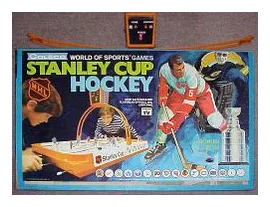
Rod Hockey is a relatively inexpensive representation of the dome-style hockey games found in many arcade halls. Using steel rods, plastic or metal hockey players slide along defined track segments.
Core mechanisms
Key systems that shape the decisions players make.
Read the full game description
Rod Hockey is a relatively inexpensive representation of the dome-style hockey games found in many arcade halls. Using steel rods, plastic or metal hockey players slide along defined track segments. There are five players and one goalie per side, just like real hockey. Players simultaneously turn and move their five metal rods to shoot the puck and pass. Games can be played using a timer or to a set number of points. Many different versions of this game have been published over the last 50+ years. Steel rods with metal gears were used before plastic ones, the plastic gear system was quickly abandoned as gears would not last. From there a curved spring was used (ImageID: 427829) from rod to player holding slider. This worked well for durability. This changed the game though considerably, as there was a bit of spring action in shooting. Slap shots were less powerful, but wrist shots worked better. Many different ice layouts were made for rod and player movement within the defined track segments. Swiveled tracks made players look like they were skating down the ice. This changed play and tactics for each game, it was considered having home ice advantage, as you were used to your game surface design. You knew how the puck bounced off the boards and where to exploit the best scoring chances. Various pucks were used, heavier ones worked better with the gear system, lighter ones worked better with the spring system. The puck with the steel ball in center moved the fastest and was most popular for the avid player.