Overview
At a glance
Is this game right for my group?
ABG editorial scores on a 1–5 scale.
Harder to teach
High replayability
Highly interactive
Scales well
Deep strategy
How it plays
How does it play?
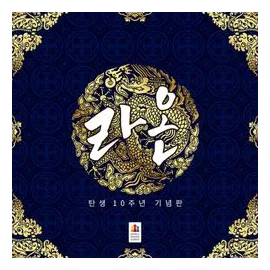
Raon means fun by traditional Korean. This game can be viewed as a Rummikub like game using Hangul (Korean alphabet) tiles instead of numbers.
Core mechanisms
Key systems that shape the decisions players make.
Read the full game description
Raon means fun by traditional Korean. This game can be viewed as a Rummikub like game using Hangul (Korean alphabet) tiles instead of numbers. Two rules, basic and speed, are provided in the manual. The following describes the basic rule. Each player initially gets 15(13 for 4 players) consonant tiles and 5 vowel tiles and then tries by turn to form a Korean word using his/her tiles. After the mandatory first time registration of 3 or more syllable word, each player's word can contain any number of syllables. Also each player can re-use any tiles from the previous player's word and return not used tiles to the draw pile; therefore there is at most only one formed word all the time. If a player cannot form a word, he/she can exchange any number of tiles with draw tiles and end his/her turn. The first player to use all his/her hand tiles