Overview
At a glance
Is this game right for my group?
ABG editorial scores on a 1–5 scale.
Harder to teach
High replayability
Highly interactive
Scales well
Deep strategy
How it plays
How does it play?
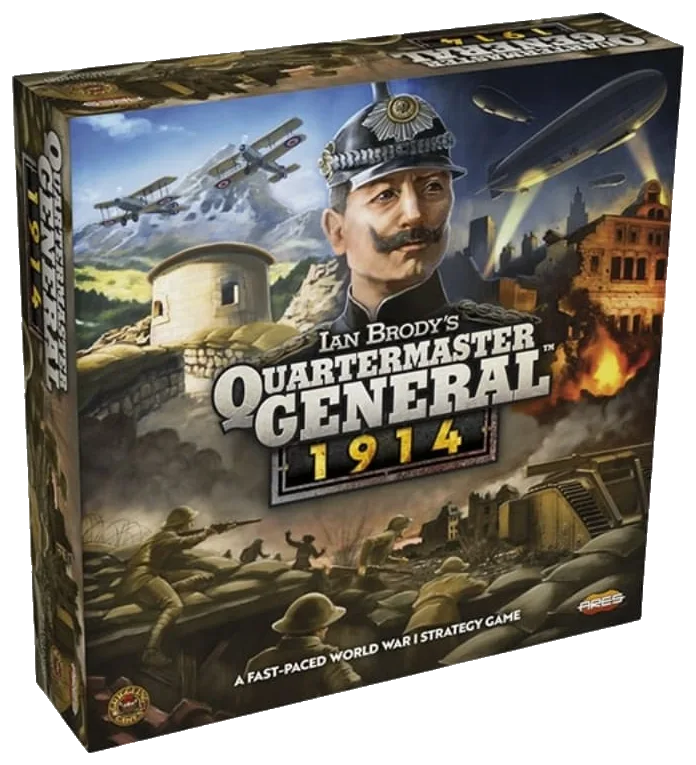
Quartermaster General: 1914 is the next title in the critically acclaimed Quartermaster General series by Ian Brody and creates a narrative of the First World War in Europe, reflecting the military, technological, and social changes that occurred over the following four years.
Core mechanisms
Key systems that shape the decisions players make.
Area Majority
Compete to have the strongest presence in areas that award control or points.
Campaign Card Play
Play cards to command conflicts and carry consequences through a campaign.
Deck / Bag Building
Add new pieces during play to improve the cards, tokens, or dice drawn later.
Hand Management
Time and sequence a limited hand of cards to preserve future options.
Chaining
Link actions or effects so one result enables the next part of a sequence.
Read the full game description
Quartermaster General: 1914 is the next title in the critically acclaimed Quartermaster General series by Ian Brody and creates a narrative of the First World War in Europe, reflecting the military, technological, and social changes that occurred over the following four years. In Quartermaster General: 1914, each card has two different uses: one when played, and another when prepared. On your turn, you have the opportunity to both play and prepare a card. You can also spend cards to draft more troops, or use cards to attrition your opponents. However, your deck represents your overall resources, so moving too quickly through your deck early might result in your unsupported armies being swept away in the final rounds of the game. This is worth it if you can capture Berlin or Paris in 1915, but if your gambit fails, you may have a tough road ahead. The game ends after 17 rounds of play, or earlier if one side has a commanding lead. —description from the publisher