Overview
At a glance
Is this game right for my group?
ABG editorial scores on a 1–5 scale.
Harder to teach
High replayability
Highly interactive
Scales well
Deep strategy
How it plays
How does it play?
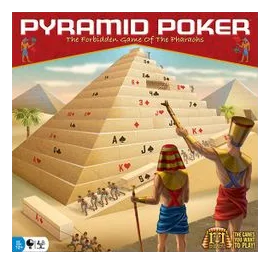
Pyramid Poker is a two-player design that consists of 54 wooden rectangular blocks, 52 of them with the standard card deck distribution (2-A in four suits) on one side and two of them with a pharaoh on one side.
Core mechanisms
Key systems that shape the decisions players make.
Read the full game description
Pyramid Poker is a two-player design that consists of 54 wooden rectangular blocks, 52 of them with the standard card deck distribution (2-A in four suits) on one side and two of them with a pharaoh on one side. To set up the game, place all of the blocks face down and shuffle them. Each player then takes fifteen blocks. They take turns looking at one of their blocks and placing them into a two-dimensional pyramid-shaped structure, again seeing only their blocks, then they take turns removing any one block from the pyramid and placing it into one of three poker hands that they're constructing. Each poker hand is competing against the one opposite it that's being built by the opponent. If a player draws a pharaoh, they draw three face-down blocks that weren't initially chosen, discard two of them, then add the third block to one of their poker hands. Once all the blocks have been removed, the player who wins two or three of the poker hands wins!