Overview
At a glance
Is this game right for my group?
ABG editorial scores on a 1–5 scale.
Harder to teach
High replayability
Highly interactive
Scales well
Deep strategy
How it plays
How does it play?
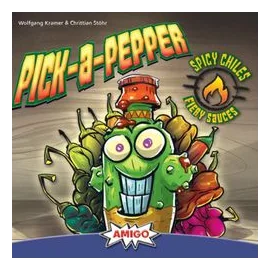
Can you prepare the hottest collection of chili sauces in Pick-a-Pepper, which was first released as Sauscharf? Mild, hot or super hot?
Core mechanisms
Key systems that shape the decisions players make.
Read the full game description
Can you prepare the hottest collection of chili sauces in Pick-a-Pepper, which was first released as Sauscharf? Mild, hot or super hot? Depending on the selected level of difficulty, players start with 8-10 cards in hand. A card display is filled with the remaining chili pepper cards, with up to three cards of the same value being placed on top of one another. The game is divided into two phases: In the first phase, players collect chilies, taking cards from the display and placing them on their personal ingredient stack. Whoever plays the highest combination of the same cards is the first to use the display. After all the ingredients have been taken, the card display is refilled and the chili collecting continues. This phase ends when no one has cards in hand. For the second phase, the previously accumulated chilies are taken into hand. In addition, a new display with sauce tasks that can be fulfilled is made available. Now the players can decide each round whether they want to collect more ingredients or use their chili-card combinations to complete a sauce task to receive chili points. The hotter the sauce, the more points you score. Depending on the number of players, the game ends as soon as someone has prepared 3-6 sauces and has no more chili cards. Whoever collects the most chili points wins.