Overview
At a glance
Is this game right for my group?
ABG editorial scores on a 1–5 scale.
Harder to teach
High replayability
Highly interactive
Scales well
Deep strategy
How it plays
How does it play?
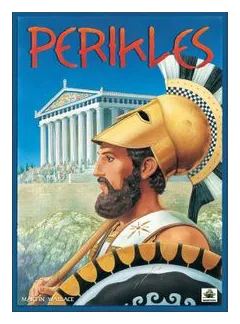
Perikles is a game from Martin Wallace. Players assume the role of a noble family seeking to become the leader of one or more of 6 ancient Greek city-states.
Core mechanisms
Key systems that shape the decisions players make.
Area Majority
Compete to have the strongest presence in areas that award control or points.
Open Drafting
Select cards or items from a shared face-up display.
Dice Rolling
Roll dice to introduce uncertainty into actions, production, movement, or resolution.
Secret Unit Deployment
Place or assign units secretly before their positions are revealed.
Read the full game description
Perikles is a game from Martin Wallace. Players assume the role of a noble family seeking to become the leader of one or more of 6 ancient Greek city-states. The game plays out in two phases: In the first, players vie for area control in each of the six states, which end in elections. Players who win the election in each state can then "control" that state's army. In the second phase, players use cards to move their armies to attack or defend one of seven battles (each tied to a state, and you can't attack your own!) that are up for grabs that round. The gameplay mechanic is straightforward, with elements drawn from other Euro-style wargames (especially Martin Wallace's Struggle of Empires). What makes Perikles unique is the smooth integration of the area control/voting phase and the military phase. From the back of the box: "Together the Greek City States had defeated the greatest power in the world, the Persians. Now, though, pride and envy have led them to fight amongst themselves in what we know today as the Peloponnesian War. Each player represents a powerful Greek family with political influence spread across the six major city states of ancient Greece. Players strive to become leaders of these cities, thus taking control of their military forces. With these forces players will aim to win glory on the battlefield."