Overview
At a glance
Is this game right for my group?
ABG editorial scores on a 1–5 scale.
Harder to teach
High replayability
Highly interactive
Scales well
Deep strategy
How it plays
How does it play?
In Sedici – Italian for "sixteen" – the sixteen game tiles are split randomly between the two players, with the pieces being placed face-up before each player.
Core mechanisms
Key systems that shape the decisions players make.
Read the full game description
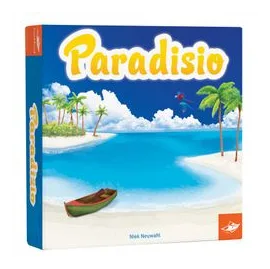
In Sedici – Italian for "sixteen" – the sixteen game tiles are split randomly between the two players, with the pieces being placed face-up before each player. Each tile is different, with one being all white, another all black, and the other fourteen being some combination of black and white triangles. On a turn, the player chooses one of his tiles and adds to the grid. Each tile played (except for the first tile) must lie against the edge of a tile already in play with like colors being adjacent to one another – black against black, and white against white – and all of the tiles must fit inside an imaginary 4x4 grid. The first player who cannot legally play a tile loses. In Paradisio, a new version of Sedici that uses island and ocean imagery instead of black and white triangles, the first player to win three rounds wins the game. Both games come with rules for three levels of solitaire play. The goal in all three is to legally place the 16 tiles in a 4x4 square, with the advanced rules requiring you to have one or both colors connected into a single group.