Overview
At a glance
Is this game right for my group?
ABG editorial scores on a 1–5 scale.
Harder to teach
High replayability
Highly interactive
Scales well
Deep strategy
How it plays
How does it play?
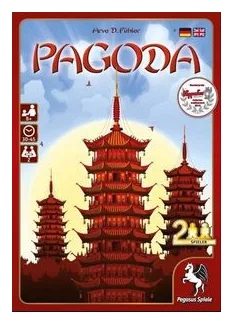
Pagoda is a two-player only game in which players compete to build multiple layers of up to six pagodas. Each player has five face-up and two face-down colored cards, and they use these cards to build colored pillars and levels of the pagoda.
Core mechanisms
Key systems that shape the decisions players make.
Read the full game description
Pagoda is a two-player only game in which players compete to build multiple layers of up to six pagodas. Each player has five face-up and two face-down colored cards, and they use these cards to build colored pillars and levels of the pagoda. Once a pillar has been placed on the ground floor, all other pillars placed must be of the same color. When someone places the fourth pillar on a level, he places a floor tile of the pillars' color on top, with this tile have colored dots to indicate which color of pillar can be placed on top. Players score points each time they place a pillar, with a pillar on ground level being worth one point, a pillar on the second floor two points, and so on. When a player places a floor tile, he gains one point as well as two actions associated with that color on his individual action board. The fourth floor tile is placed upside-down to show only one colored dot. Two pillars can be placed on this dot, each worth five points, and once placed the pagoda is finished. After three pagodas are finished, players finish the round, then the player with the most points wins.