Overview
At a glance
Is this game right for my group?
ABG editorial scores on a 1–5 scale.
Harder to teach
High replayability
Highly interactive
Scales well
Deep strategy
More strategic control
How it plays
How does it play?
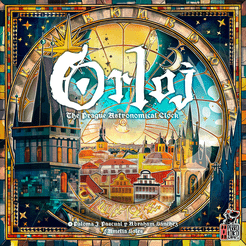
Turn the great clock face, place workers where its hands point, and build calendar months, zodiac spheres, apostles, workshops, and expertise in 1865 Prague.
Core mechanisms
Key systems that shape the decisions players make.
Rondel
Move around a circular action track that limits which actions are currently reachable.
Action Retrieval
Previously used actions must be recovered before they can be selected again.
Tech Progression
Unlock or improve abilities by progressing through connected development paths.
Set Collection
Gather related items that become more valuable when scored together.
End Game Bonuses
Earn additional points for meeting conditions evaluated when the game ends.
Read the full game description
Orloj casts players as master builders completing the Prague astronomical clock during its nineteenth-century restoration. Each turn begins by manipulating the interlocked dials, then placing a worker where the astronomical hand points to trigger a configurable primary action and a neighboring secondary action. Resources become calendar segments, zodiac spheres, apostles, workshops, assistants, and progress across three knowledge tracks. Forcing the mechanism grants flexibility but creates deviations that must be corrected before the rooster calls. The calendar itself is the game clock: when it is complete, carefully aligned constructions and developed expertise determine the most harmonious contribution.