Overview
At a glance
Is this game right for my group?
ABG editorial scores on a 1–5 scale.
Harder to teach
High replayability
Highly interactive
Scales well
Deep strategy
How it plays
How does it play?
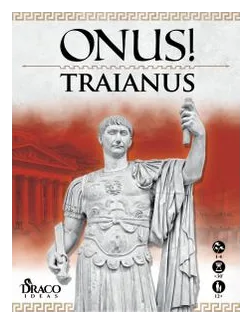
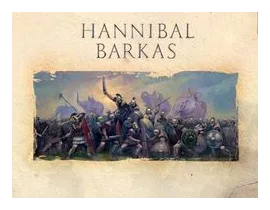
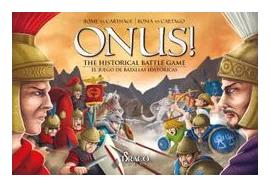
Have you ever dreamed of commanding a powerful army? Have you ever imagined leading troops, which included elephants over the Pyrenees and the Alps to try to conquer Rome?
Core mechanisms
Key systems that shape the decisions players make.
Open Drafting
Select cards or items from a shared face-up display.
Campaign Card Play
Play cards to command conflicts and carry consequences through a campaign.
Dice Rolling
Roll dice to introduce uncertainty into actions, production, movement, or resolution.
Simultaneous Action Selection
Choose actions secretly or concurrently before revealing them together.
Read the full game description
Have you ever dreamed of commanding a powerful army? Have you ever imagined leading troops, which included elephants over the Pyrenees and the Alps to try to conquer Rome? Have you enjoyed a good historical novel dated on the old Republic of Rome, and you would like to travel to that time? ONUS! Rome Vs Carthage is a war game similar to miniatures games in which both sides fight an ancient battle. The game is mainly based on the II Punic war, although battles from III to I B.C centuries can be also simulated. The game concept combines both, orders and events cards, that makes each game different and each combat becomes unpredictable and thrilling. ONUS! can be played anywhere but to get the best gaming experience we do recommend a game area as large as possible, i.e. 3.2 x 2.9 feet (100 x 90 cm). Units are represented by cards which have been scaled around a Centuria (also known as Century) or to a Maniple (also known as Manipulus), representing formations from 80 to 100 men for Infantry units, 20 cavalrymen for Cavalry units or 6 Elephants. Units have their own set of traits to represent permanent attributes of the unit, like Melee Combat, Range Attack, Defensive capacity, Morale and Life, and Movement capacity. This set of traits gets bonuses and penalties depending on the ongoing situation and combat engagements. Units also have their unique set of skills to represent specific abilities they can perform: from defensive formations to extremely effective techniques to attack enemies. Some of these skills need to be activated, meaning only one of them can be used in an engagement, while others are inherent to the units. Leadership is represented in the game by the figure of the General. A General’s token represent his HQ and its own escort. In addition to the leadership benefit, a General grants bonuses to nearby units, boosting the morale of the troops and providing additional benefits when they are engaged with the enemy in those bloody encounters. Both, Hannibal and Scipio, two well-known Generals are included in the game with their unique set of bonuses! Also, Heroes, Veterans and Elite units take part in Onus! ONUS! Rome Vs Carthage is played in turns, composed by six different phases each: 1. Activation of Units: in this phase, the active player can play any number of Order cards from his hand, stating what units are going to be used during the turn. 2. Movement and Charges: in this phase, the active player may move all those units activated in the previous phase. Those units finishing their movement in contact with enemy units, may Charge against them. 3. Range Attack: those active units able to carry out Ranged Attacks and which haven’t moved or executed a Reduced Movement may shoot enemies within its maximum range. Also, special units like Skirmirsher have this skill, thus they may want to use this ability. 4. Skirmishers: units having these specific skill can harass enemy units, provided they haven't spent all their movement points. 5. Combat: All engagements are resolved in this phase, being the active player the one choosing the order of combats. 6. Flee Movement: units fleeing continue their movement if Morale checks fail.