Overview
At a glance
Is this game right for my group?
ABG editorial scores on a 1–5 scale.
Harder to teach
High replayability
Highly interactive
Scales well
Deep strategy
How it plays
How does it play?
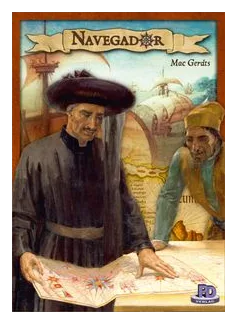
This game is inspired by the Portuguese Age of Discoveries in the 15th-16th century. Players take actions such as contracting men, acquiring ships and buildings, sailing the seas, establishing colonies in discovered lands, trading goods on the market, and getting privileges.
Core mechanisms
Key systems that shape the decisions players make.
Area Movement
Move pieces between connected regions rather than along individual spaces.
Market
Buy and sell through a shared supply whose availability or prices can change.
Rondel
Move around a circular action track that limits which actions are currently reachable.
Advantage Token
A transferable advantage changes ties, priority, or the strength of an action.
Read the full game description
This game is inspired by the Portuguese Age of Discoveries in the 15th-16th century. Players take actions such as contracting men, acquiring ships and buildings, sailing the seas, establishing colonies in discovered lands, trading goods on the market, and getting privileges. Each player starts with only two ships and three workers and tries to expand his wealth. There are several undiscovered lands that allow players, once discovered, to found some colonies there. Colonies exist in different places where sugar, gold and spices are available and can be sold to the market to make some money. Money is used to build ships, erect buildings such as factories, shipyards and churches, and to get workers. Workers are necessary to found colonies or to acquire buildings and privileges, which exist in five categories and therefore encourage players to follow different strategies competing with each other. At the end of the game the player who is most successful in combining his privileges with his achievements (colonies, factories, discoveries, shipyards, and churches) is the winner.