Overview
At a glance
Is this game right for my group?
ABG editorial scores on a 1–5 scale.
Harder to teach
High replayability
Highly interactive
Scales well
Deep strategy
How it plays
How does it play?
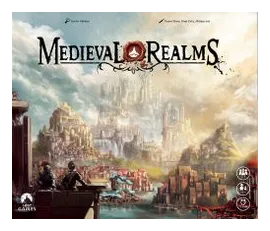
Medieval Realms is an economic euro game for 2 to 5 players. Each player will asume the role of a medieval king.
Core mechanisms
Key systems that shape the decisions players make.
Read the full game description
Medieval Realms is an economic euro game for 2 to 5 players. Each player will asume the role of a medieval king. You will have to make your decisions to develope your own realm. The game will be played during 7 rounds. On each round players will have 2 different phases. In the first phase, all players will secretly place their leaders (mayors, generals and admirals) in the different spots on their player boards to earn resources (gold, production, materials, science, culture, religion and battle points). In the second phase, players can take cards from the row using their resources. There are 10 different types of cards (leaders, cities, markets, islands, territories, wars, castles, science, religion and culture). There are 3 different cards mechanisms: bidding, cards in hand and majority. At the end of the game the player with the most victory points wins the game. —description from the publisher