Overview
At a glance
Is this game right for my group?
ABG editorial scores on a 1–5 scale.
Harder to teach
High replayability
Highly interactive
Scales well
Deep strategy
How it plays
How does it play?
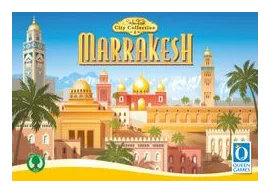
Compete with other influential families in the city to achieve the most honorable titles through the skillful use of assistants and resources at your disposal. The player who succeeds in doing this best becomes the new "Obermufti" of Marrakesh.
Core mechanisms
Key systems that shape the decisions players make.
Open Drafting
Select cards or items from a shared face-up display.
Simultaneous Action Selection
Choose actions secretly or concurrently before revealing them together.
Cube Tower
Drop pieces into a tower that unpredictably releases some of its stored contents.
End Game Bonuses
Earn additional points for meeting conditions evaluated when the game ends.
Read the full game description
Compete with other influential families in the city to achieve the most honorable titles through the skillful use of assistants and resources at your disposal. The player who succeeds in doing this best becomes the new "Obermufti" of Marrakesh. Marrakesh is played over three rounds, with each round consisting of four turns. On each turn, players simultaneously and secretly choose three colored cylinders from behind their screen. Then, in turn order, they place matching colored assistants on their player board (these will be the actions they will perform later), then all cylinders are placed in the cube tower. The cube tower randomizes which cylinders are available this round, with some getting stuck and some from previous rounds coming out. In turn order, players select a color and take 1-2 of the cylinders that have passed through the tower (or those that were stuck from a previous round but have now emerged) and place them on their player boards. These cylinders will enhance future actions taken in the same color in future rounds. Then, in turn order players will activate the regions where they have placed an assistant. Actions allow players to gain wealth, which can be traded for influence in the city. Performing various actions also earns bonuses and enhances actions even more as the game proceeds. The player who scores the most points by the end of the game wins. —description from the publisher