Overview
At a glance
Is this game right for my group?
ABG editorial scores on a 1–5 scale.
Harder to teach
High replayability
Highly interactive
Scales well
Deep strategy
How it plays
How does it play?
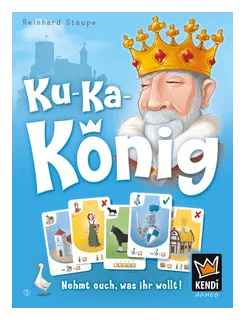
Choose the cards you want in Ku-Ka-König, and ideally they'll end up in your collection — and not be thrown away. To play, shuffle the 112 cards, then lay out three cards in 6-8 numbered columns depending on whether you're playing with two, three, or four people.
Core mechanisms
Key systems that shape the decisions players make.
Read the full game description
Choose the cards you want in Ku-Ka-König, and ideally they'll end up in your collection — and not be thrown away. To play, shuffle the 112 cards, then lay out three cards in 6-8 numbered columns depending on whether you're playing with two, three, or four people. At the same time, everyone declares which column of cards they want to take. If no one else has claimed that column, take the cards and add them to your collection; if two or more player choose the same column, discard the final card of that column, then all tied players simultaneously declare a column number once again. Keep going until all players have taken cards from a column. Refill the columns to three cards each, then play another round. When a player has collected at least 13 cards at the end of a round, score everyone's collection, with ties being friendly: Kings score based on how many you have: (n-1)² points. Knights are 1 point each, unless you have the most in which case they're 2 points each. Churches give 10 points to whoever has collected the most. And so on. Some cards bear an X, and these cards are discarded after the first scoring. Players then continue playing rounds until the deck runs out, then players score for their collection once again. Whoever has the highest combined score wins.