Overview
At a glance
Is this game right for my group?
ABG editorial scores on a 1–5 scale.
Harder to teach
High replayability
Highly interactive
Scales well
Deep strategy
How it plays
How does it play?
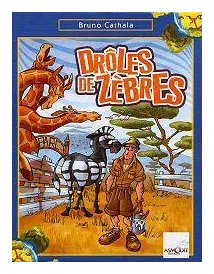
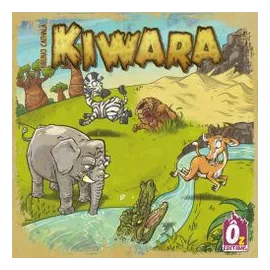
In Kiwara, two groups of animals compete for space in the savanna, claiming points when they dominate a territory, but the value of a space depends on who's in it!
Core mechanisms
Key systems that shape the decisions players make.
Read the full game description
In Kiwara, two groups of animals compete for space in the savanna, claiming points when they dominate a territory, but the value of a space depends on who's in it! The game board features six territories — two each of three, five, and seven spaces — with rivers dividing all of the territories. Each player has fifteen animals tokens in their color. One player places the totem on a space outside the 6x5 board, then players alternate taking turns. On a turn, a player: • Places one of their animal tokens in an empty space in the row or column adjacent to the totem. • Moves the totem 1-3 spaces clockwise. (If all spaces in these rows or columns are full, the player moves the totem to the first row with an empty space.) If a lion is placed orthogonally adjacent to zebras or gazelles, then the zebras are turned face down (yum!) while the gazelles are returned to their owners. If a player must place a zebra or gazelle adjacent to a lion, these tokens are placed face down. If you place a crocodile across the river from a gazelle, you can exchange these tokens. (The crocodile attacks, and the gazelle bounds to safety.) You can swap the location of a crocodile many times this way. Whoever places the token that fills the first savanna claims the Okapi card, which is worth 5 points at game's end. Once the board is filled, determine who has the most tokens in each territory; face-down tokens are counted to determine majority. Whoever wins a territory scores points equal to the value of all face-up animals in this territory: zebras 6, gazelles 2, elephants 5, lions 1, and crocodiles 0. Whoever has the most points wins! While the base game of Kiwara is the same as the earlier Drôles de Zèbres, the game includes a double-sided game board. If you use the "free play" side of the board, to set up you use the river sticks included to create six territories of sizes 3, 5, 7 or 9, thereby creating a fresh layout for each game. Instead of using the Okapi, you can shuffle the ten-card reinforcement deck and give the player who completes the first savanna a random card; the player can use the bonus action on this card at any point during the game. With players of differing skills, the more inexperienced player can start with a card or two at random to level the odds.