Overview
At a glance
Is this game right for my group?
ABG editorial scores on a 1–5 scale.
Harder to teach
High replayability
Highly interactive
Scales well
Deep strategy
How it plays
How does it play?
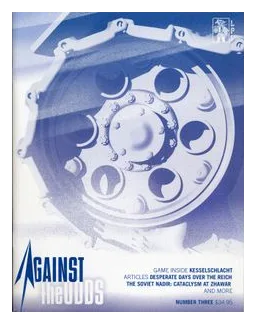
(from ATO web site:) Kesselschlacht: Ukraine Spring 1944, (literally, "cauldron battle") is a simulation depicting the encirclement and escape of the German First Panzer Army from the Ukraine in the Spring of 1944.
Core mechanisms
Key systems that shape the decisions players make.
Read the full game description
(from ATO web site:) Kesselschlacht: Ukraine Spring 1944, (literally, "cauldron battle") is a simulation depicting the encirclement and escape of the German First Panzer Army from the Ukraine in the Spring of 1944. The German forces were very low on fuel and ammunition and had been caught flat-footed by yet another overwhelming Soviet offensive. First Panzer Army had been cut-off by a total of nine Soviet armies. Its breakout began on March 25, 1944, and continued into early April. In these two weeks, the Germans continuously conducted a mobile defense as their pocket drove westward in an effort to meet a relief force (which was spearheaded by the II SS Panzer Corps) attacking eastward. Supplied by air much of the time, First Panzer Army deceived the Soviet forces by moving west, instead of south as the Soviet generals had anticipated. The pocket crossed several swollen rivers, and struggled through thick mud and deep snow, yet somehow remained intact. Unlike the Korsun Pocket disaster the month before, this time the Germans avoided yet another debacle. The commander of the First Panzer Army, Generaloberst Hans Hube, through his skillful leadership, proved to be a master of mobile defensive warfare. Game Scale: Turn One day turns Hex: 5.5Km Units: Battalions to Divisions Complexity - Medium Solitaire Suitability - Medium Contents: One Full color 22"x34" map Two Counter sheets (360 1/2" counters) One 24 page rulebook Two Air Sector Charts One six-sided die