Overview
At a glance
Is this game right for my group?
ABG editorial scores on a 1–5 scale.
Harder to teach
High replayability
Highly interactive
Scales well
Deep strategy
How it plays
How does it play?
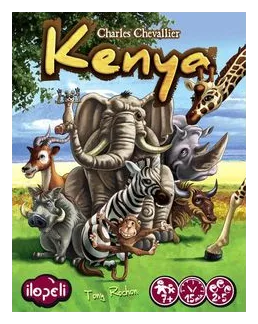
At the start of Kenya, a card game of African animals, each player receives a hand of four cards: three animals and a "goal" card; each goal card depicts a pair of identical animals, and you want to have the most face-up animals of this kind in play at the end of the game.
Core mechanisms
Key systems that shape the decisions players make.
Read the full game description
At the start of Kenya, a card game of African animals, each player receives a hand of four cards: three animals and a "goal" card; each goal card depicts a pair of identical animals, and you want to have the most face-up animals of this kind in play at the end of the game. Taking turns, each player adds one of three face-up animal cards to his hand, then plays a card onto the line of cards already on the table (the savannah) until a player has no cards in hand. (The goal card is played during the game as an animal card.) Each kind of animal has a power when played: the meerkat allows the player to draw an additional card; the lion returns a card next to him face down; the elephant returns a card next to him face up; and the rhino moves a card. Some animal cards depict ponds, and animals next to ponds score two points instead of one.