Overview
At a glance
Is this game right for my group?
ABG editorial scores on a 1–5 scale.
Harder to teach
High replayability
Highly interactive
Scales well
Deep strategy
How it plays
How does it play?
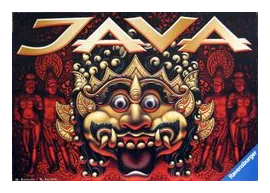
Java is a fascinating island with great potential for development — especially the undeveloped area of central Java with its fertile soil and rich natural resources. These riches are much desired by the rulers of the regions that surround central Java.
Core mechanisms
Key systems that shape the decisions players make.
Action Points
Spend a limited allowance of points across several possible actions each turn.
Area Majority
Compete to have the strongest presence in areas that award control or points.
Tile Placement
Place tiles to build a shared or personal spatial arrangement.
Layering
Place components over earlier pieces so their order and overlap affect play.
Read the full game description
Java is a fascinating island with great potential for development — especially the undeveloped area of central Java with its fertile soil and rich natural resources. These riches are much desired by the rulers of the regions that surround central Java. Each player, as one of the Javanese rulers, tries to develop the region for themselves. Each wants to bring their culture and control to these undeveloped areas. The players irrigate the land and cultivate new rice fields; they build villages and palaces, and create cities from the villages. Each player desires to be the dominant force in the development of this new area. Players earn fame points for building and enlarging palaces, for creating irrigation systems, and for arranging palace festivals. The player with the most fame points after the final scoring wins. Java is the second game of the Mask Trilogy.