Overview
At a glance
Is this game right for my group?
ABG editorial scores on a 1–5 scale.
Harder to teach
High replayability
Highly interactive
Scales well
Deep strategy
How it plays
How does it play?
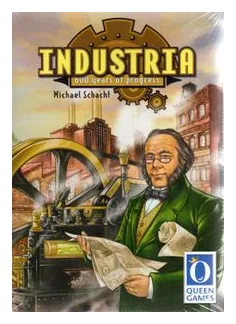
Description from designer Michael Schacht (swiped from the Terminal City Gamers site, who in turn got it from Erwin Broens): You play chronologically in 5 time periods with specific industries and technologies. It is a bidding game.
Core mechanisms
Key systems that shape the decisions players make.
Read the full game description
Description from designer Michael Schacht (swiped from the Terminal City Gamers site, who in turn got it from Erwin Broens): You play chronologically in 5 time periods with specific industries and technologies. It is a bidding game. The new bidding system is: You have an auctioneer. He sells several open cards. He decides the selling order (one by one). The others make clockwise just one bid or no bid. The auctioneer can accept the highest bid, take the money, and sell the next card, or the auctioneer can take the card by himself, but then he is no longer the auctioneer (next clockwise is). If no one bids on something, the auctioneer must take the card (that can be hard because money is really short) - so you have to be careful what you sell. The cards you're bidding on are production places, technologies, resources, and improvements (bonus). After the bidding phase you can build production places and improvements and develop technologies, then you immediately get victory points. For that you need money and resources (mainly from other production places). Problem: If you build late (next period started) you get less or nothing. At the end you get extra points for good improvement combinations and production places that work together. Reimplemented by: Industry