Overview
At a glance
Is this game right for my group?
ABG editorial scores on a 1–5 scale.
Harder to teach
High replayability
Highly interactive
Scales well
Deep strategy
How it plays
How does it play?
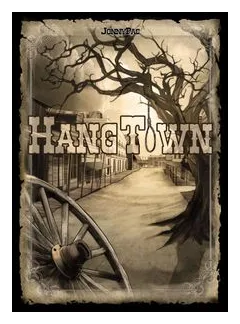
In January of 1848, an event occurred which changed the face of the west—gold was discovered on the American River in California. News spread around the world and the era of the 49’ers began.
Core mechanisms
Key systems that shape the decisions players make.
Deck / Bag Building
Add new pieces during play to improve the cards, tokens, or dice drawn later.
Simultaneous Action Selection
Choose actions secretly or concurrently before revealing them together.
Dice Rolling
Roll dice to introduce uncertainty into actions, production, movement, or resolution.
Hand Management
Time and sequence a limited hand of cards to preserve future options.
Variable Phase Order
The order of phases changes according to player choices or game state.
Read the full game description
In January of 1848, an event occurred which changed the face of the west—gold was discovered on the American River in California. News spread around the world and the era of the 49’ers began. Thousands of young people left their farms and homes to make their fortunes out west. As these pioneers swarmed to California, hundreds of mining camps sprang up throughout the Mother Lode. Eight miles from the gold discovery site, a camp known as “Old Dry Diggins” was established. By 1849, it became known as “Hangtown.” There are many stories as to how this infamous nickname came to be, but the most common is that in January of 1849, after a very brief trial, three men were hung from a large oak tree near the corner of Main and Center Streets—an act of swift justice, as they say. In April and again in July of 1856, most of Old Hangtown, now bearing the name Placerville, was destroyed by fire. Buildings were ultimately built of brick and stone thereafter. In addition, a large bell tower was erected in the center of town as a fire warning system. By then, people had begun to value the area for more than just mining. The region had an abundance of lumber and rich agricultural land, making it perfectly situated to grow into a thriving community. _____________ In the game of Hangtown, players become Gold Rush era Pioneers who are competing for riches, resources, property, and prestige. …They must also be prepared to deal with outlaws, shootouts, and hangings at the infamous Hangman’s Tree! The game features a thoughtful variety of streamlined mechanics, which are notably innovative, yet traditional and familiar in feel—such as fresh spins on tableau building, worker placement, simultaneous action selection, variable turn order, and resource and hand management. Some of the best strategies in Hangtown rely on a balance between optimizing one’s own scheme and cunningly “playing the players”. A standout theme in the game is “Boom or Bust”. If a player can get “out of phase” for a turn, he or she will profit from a “Boom yield” and get bonuses, while the other players may go “Bust” and get very little. But of course, this takes sharp wits and some clever guesswork… The game is played in a series of rounds, which break down into a series of turns and phases. In a turn, each player selects one card that will determine the phase that his or her Pioneer will take action in. When the players are ready, they simultaneously reveal their chosen cards and place their Pioneer pawns in the corresponding yield sites on the board. Then the phases are resolved in numeric order as the players take their Pioneers’ actions. The total number of Pioneers in each yield site determines whether the outcome is Boom or Bust. To whatever degree, the different site actions allow the players to place workers, activate workers, collect resources, and add cards to their face-up tableau areas of historic buildings, districts, and monuments. Every card built in a tableau grants the player new abilities as well as Victory Points for the final scoring. After each turn is completed, the looming Outlaw pawn advances into the next section of the board, locking that particular yield site into a Bust outcome. Furthermore, when the Outlaw lands in the last section, it triggers a “Final Shootout”! In this special phase, all of the players must defend themselves against the Outlaw’s bold attack by using gunmen positioned on Main Street. If the players beat the Outlaw, they gain additional Victory Points as a reward. But if they fail, they must send their lost gunmen to their early graves in the Union Cemetery… The Wild West theme of the game is based closely on the California Gold Rush of 1849 through the turn of the century. The city of Placerville, also known as Old Hangtown, has a rich history, which has been worked into the game at every juncture. For instance, the town cards feature historic landmarks such as the Bell Tower, Soda Works, and Studebaker Wheelbarrow Shop; while the periodic “Events” feature the Wagon Train, mail delivery from Snowshoe Thompson, and digging up The Mother Lode at Gold Bug Mine. Many beautifully restored historic photographs and illustrations are included as well. Hangtown plays wonderfully with two to six players, and it can be set to play in two separate modes: Discovery for newcomers and casual gamers, and Highgrade for seasoned gamers and experienced players. The modes appeal to a wide range of folks and settings—from light family fun to heavy brain burning. The game also includes an expansion that opens up bidding on several character roles. These roles, such as the Robber, Deputy, Prospector, and Gunslinger, allow each player to use a unique special ability for one entire round at a time. The game offers many paths to victory and great replayability.