Overview
At a glance
Is this game right for my group?
ABG editorial scores on a 1–5 scale.
Harder to teach
High replayability
Highly interactive
Scales well
Deep strategy
How it plays
How does it play?
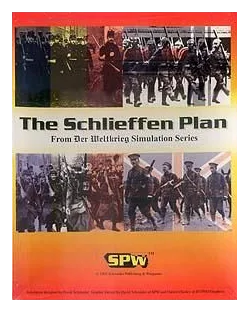
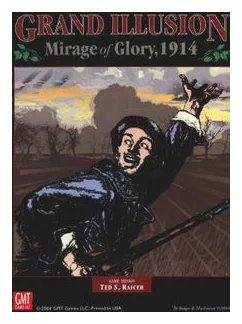
The German invasion of France and Belgium in 1914, the opening campaign of World War One, is one of the most dramatic in history: the famed German Schlieffen Plan, the infamous French Plan 17, the turn of the tide that was "the Miracle of the Marne," the series of outflanking moves in the" Race to the Sea," the death of the "old Contemptibles" of the BEF at First Ypres. It was the campaign that failed to end the First World War "before the leaves fell," dooming the old Europe of kings and emperors to slow suicide in the trenches of the western front.
Core mechanisms
Key systems that shape the decisions players make.
Action Points
Spend a limited allowance of points across several possible actions each turn.
Area-Impulse
Players alternate short actions within contested areas until everyone passes.
Dice Rolling
Roll dice to introduce uncertainty into actions, production, movement, or resolution.
Grid Movement
Move pieces between adjacent spaces on a regular grid.
Simulation
Model a real or imagined system through detailed cause-and-effect rules.
Hexagon Grid
Use a hexagonal map where each space connects evenly in six directions.
Read the full game description
The German invasion of France and Belgium in 1914, the opening campaign of World War One, is one of the most dramatic in history: the famed German Schlieffen Plan, the infamous French Plan 17, the turn of the tide that was "the Miracle of the Marne," the series of outflanking moves in the" Race to the Sea," the death of the "old Contemptibles" of the BEF at First Ypres. It was the campaign that failed to end the First World War "before the leaves fell," dooming the old Europe of kings and emperors to slow suicide in the trenches of the western front. And leaving men to wonder ever after-could the outcome have been different?