Overview
At a glance
Is this game right for my group?
ABG editorial scores on a 1–5 scale.
Harder to teach
High replayability
Highly interactive
Scales well
Deep strategy
How it plays
How does it play?
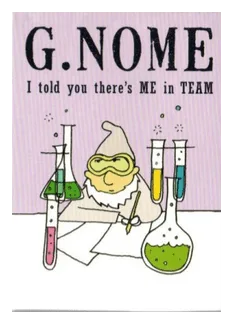
You are a soon-to-be-famous gnome scientist helping to map the gnome GNA. Teamwork is the best way to advance your research, but gnomes are naturally grumpy and uncooperative, and besides only one scientist can win the Gnobel prize.
Core mechanisms
Key systems that shape the decisions players make.
Read the full game description
You are a soon-to-be-famous gnome scientist helping to map the gnome GNA. Teamwork is the best way to advance your research, but gnomes are naturally grumpy and uncooperative, and besides only one scientist can win the Gnobel prize. G.Nome is an innovative partnership game in which you have to balance working together to beat the other teams, while staying ahead of your partner. GAMEPLAY G.Nome is very simple and fast with a tight tactical decision in card play where most of the time you are working closely with your partner against the rival team(s) but at crucial moments you are also trying to out-negotiate and out-think your own partner. The core mechanic of G.Nome is you are competing on projects to earn research results(colored cards) that are up for grabs each turn. The game lasts 8 rounds. Everyone starts with a hand of 9 Teamwork cards (1-9) and each turn plays one card that will indicate how much effort you are going to put into the project, and consequently what order you will get to choose the research cards on offer. Teamwork cards are chosen and revealed simultaneously. If both team members play the same card they automatically lose ! Then Teammates add up their total teamwork effort for the Team Total, and the Team with the highest Total chooses first with the player in that team who played the highest card taking the pick and keeping it for himself. Then the lowest card player in the losing team goes next. So if you care about the cards on offer you either want to persuade your partner to play high (and play higher than him) or persuade him to go low (and go lower than him) but never risk playing the same card as him. At it's best G.Nome is for 4 players with each game having a change of partners and the highest cumulative score winning overall.