Overview
At a glance
Is this game right for my group?
ABG editorial scores on a 1–5 scale.
Harder to teach
High replayability
Highly interactive
Scales well
Deep strategy
How it plays
How does it play?
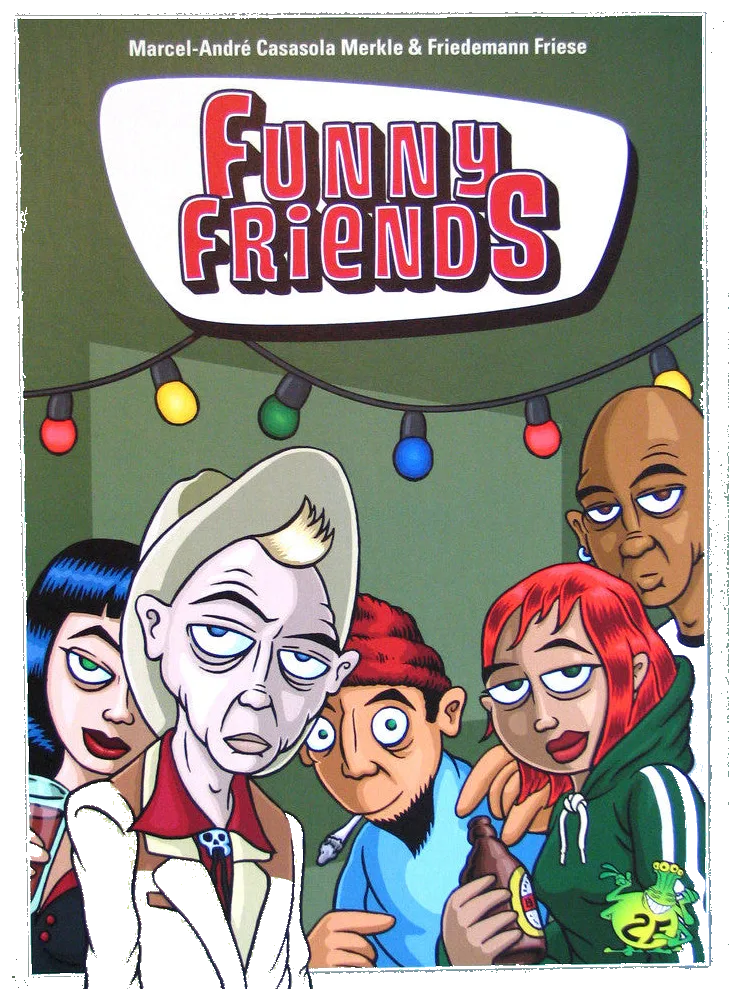
Each player plays a character who starts the game as a teenager and then must choose the cards that will make his life take shape.
Core mechanisms
Key systems that shape the decisions players make.
Auction/Bidding
Bid against other players to determine who receives an item, action, or priority.
Open Drafting
Select cards or items from a shared face-up display.
Hand Management
Time and sequence a limited hand of cards to preserve future options.
Simulation
Model a real or imagined system through detailed cause-and-effect rules.
Read the full game description
Each player plays a character who starts the game as a teenager and then must choose the cards that will make his life take shape. He can repeat a school year and get new friends, start smoking, take part in a Bible discussion group and have his first sexual intercourse during Oktoberfest – all very realistic. Every event in the life of a character has some effect on his main characteristics - tobacco addiction, alcohol addiction, drug addiction, wealth, health, sadness, spirituality and wisdom. Excess comes at a price, though, and when a characteristic gets too high, it cancels another one – if you smoke too much, you get thin; if you get too fat, you must stop drinking; if you drink too much you lose your wisdom, and so on – once more, very realistic. During game, you can get friends, and often more, with other player’s characters. This is an important feature in the game, since what happens to you usually affects, in good or bad, your friends, and this is one of the main interaction aspects of the game. Description from Bruno Faidutti's ideal game library.