Overview
At a glance
Is this game right for my group?
ABG editorial scores on a 1–5 scale.
Harder to teach
High replayability
Highly interactive
Scales well
Deep strategy
How it plays
How does it play?
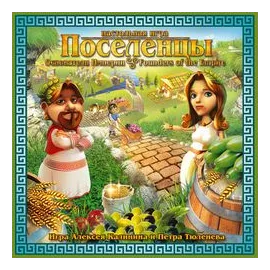
Three hundred years before the Common Era, the shores of the Mediterranean Sea are inhabited by dozens of peoples, but only one of these nations is destined to found a great civilization that will spread from Egypt to Britannia.
Core mechanisms
Key systems that shape the decisions players make.
Read the full game description
Three hundred years before the Common Era, the shores of the Mediterranean Sea are inhabited by dozens of peoples, but only one of these nations is destined to found a great civilization that will spread from Egypt to Britannia. Take up the reigns of rule in your hands and prove that you are the only one worthy to unite half the world under your banner! In Founders of the Empire, each player expands his own domain using four types of square tiles: Green tiles represent natural landscapes: forests, cliffs, lakes, etc. They can be added to the players' domains freely. These tiles provide basic resources: wood, stone, plants and water. Blue tiles are village buildings that require specific natural resources. For instance, the mine (which provides gold) should be placed next to stone and water sources. Purple tiles represent city structures: marketplaces, inns, workshops and army camps. They also should be placed next to other tiles that give certain resources. In addition to providing corresponding resources, city tiles give their owners action tokens that can be used at any point of the game. Red tiles are temples and altars that give players victory points. They are of different values (from 1 to 3 points) and require different combination of resources. A player's turn consists of three phases. First, the player must add a new tile from the stack to the common market. Then, he has the option of playing one of his tokens; these tokens are able to buy opponents' resources, pillage enemy tiles, transfer resources between tiles, and convert resources to victory points. Finally, the player must add a tile from the market to his domain. The game ends after all red tiles are added to the players' domains. Each player calculates victory points from his temples and tokens, and the player with the most points wins.