Overview
At a glance
Is this game right for my group?
ABG editorial scores on a 1–5 scale.
Easier to teach
High replayability
Low interaction
Scales well
Deep strategy
More strategic control
How it plays
How does it play?
Rotate a shared board through four Italian venues, time the return of your cheesemakers, and turn carefully aged wheels into prestige.
Core mechanisms
Key systems that shape the decisions players make.
Closed Drafting
Choose from hidden cards or items before passing or revealing the remainder.
Contracts
Complete specific requirements to earn rewards, income, or victory points.
Chaining
Link actions or effects so one result enables the next part of a sequence.
End Game Bonuses
Earn additional points for meeting conditions evaluated when the game ends.
Bias
Hidden or asymmetric information systematically changes how outcomes are interpreted.
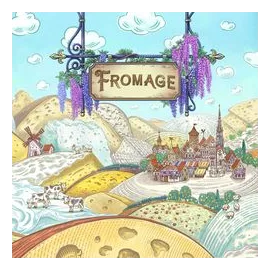
Read the full game description
Formaggio is a simultaneous worker-placement game about running an Italian creamery at the beginning of the twentieth century. The circular board is divided into four venues, and every player acts on the quadrant currently facing them. Workers gather livestock and fruit, make different cheeses, claim structures, and pursue the scoring puzzle printed on that venue. Once everyone has placed, the board rotates. That movement ages newly made cheese and changes which actions each player can reach, while the distance chosen for a worker determines how many rotations pass before it returns. The Vigneto rewards wine pairings, Venezia sends gondolas along restaurant routes, Regioni builds influence across Italy, and the Banca accepts cheese as collateral. Orders, seasonal bonuses, player-board abilities, and structure tiles provide further ways to convert a tightly scheduled production line into prestige. Because turns are simultaneous, one to four players finish in roughly the same thirty-to-forty-five-minute window. Formaggio is fully playable on its own, but owners of Fromage can mix board quadrants and structure tiles from both boxes to create new combinations of French and Italian venues.