Overview
At a glance
Is this game right for my group?
ABG editorial scores on a 1–5 scale.
Harder to teach
High replayability
Highly interactive
Scales well
Deep strategy
How it plays
How does it play?
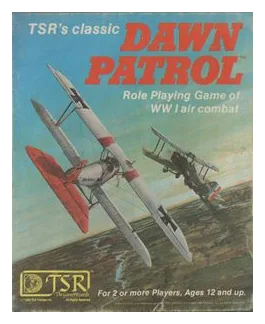
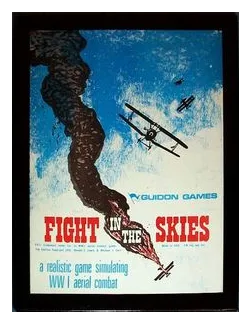
This is a simulation game designed to re-create the essence of World War I aerial combat in the last two years of the war. All of the major aircraft types of that time are included.
Core mechanisms
Key systems that shape the decisions players make.
Grid Movement
Move pieces between adjacent spaces on a regular grid.
Dice Rolling
Roll dice to introduce uncertainty into actions, production, movement, or resolution.
Role Playing
Make decisions or communicate from the perspective of an assigned character.
Critical Hits and Failures
Exceptional die results create unusually strong successes or severe failures.
Paper-and-Pencil
Record choices and results directly on a personal sheet.
Read the full game description
This is a simulation game designed to re-create the essence of World War I aerial combat in the last two years of the war. All of the major aircraft types of that time are included. Use of maneuver cards, covering the aerobatic possibilities of the era, as well as dice and charts, for probability resolution, make for realistic dogfight challenges. The game has an active club, The Fight in Skies Society, which hosts one or two weekends of play in the Midwest each year and publishes The Aerodrome two to four times each year. Later updated and released by TSR as Dawn Patrol. Expanded by: Zeppelin (Self-published) Re-implemented by: Dawn Patrol