Overview
At a glance
Is this game right for my group?
ABG editorial scores on a 1–5 scale.
Harder to teach
High replayability
Highly interactive
Scales well
Deep strategy
How it plays
How does it play?
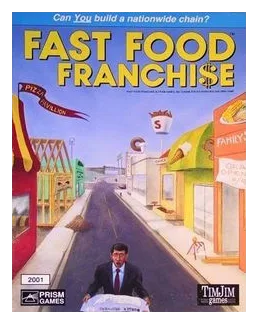
Players compete with each other to start fast food corporations, open new markets, launch advertising campaigns, and build nationwide chains of restaurants.
Core mechanisms
Key systems that shape the decisions players make.
Read the full game description
Players compete with each other to start fast food corporations, open new markets, launch advertising campaigns, and build nationwide chains of restaurants. The winner is the first player to make a million dollars, or be the only player left in the game if all other players go bankrupt. From Wikipedia: Initially, the game looks like Monopoly. There is a board, with spaces around the edges. Some of these spaces can be controlled. Each time you land on a space controlled by an opponent, you pay them money. The inside of the board is an abstracted map of the United States. There are no fixed "color groups;" rather, your controlled outer spaces ("Markets") are the major cities of the USA, and you need to use the inner map to connect these markets. Connected markets act like multiple colors in a color group. However, the expansion in the middle map is far more strategic than random. Where Monopoly is a game about trading property, Fast Food Franchise is a game of controlling the inner map.