ABG All Board Games
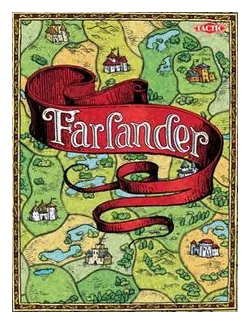
Farlander box art

Farlander

Players

2-4

Time

?-?

Age

10+

Weight

1.62

Rating

5.54

Fit

Teach 2.4

Teaching signal

Replay 3.9

High replayability

Interaction 3.7

Highly interactive

Scaling 4.0

Scales well

Strategy 4.5

Deep strategy

Control 2.8

Luck-sensitive

Table feel

Farlander has a high level of direct confrontation and strategic depth in confrontation. Players must frequently pay attention to and react to each other's strategies. However, the game does not emphasize cooperation as much.

Replay value

Farlander has a high replayability score due to its high variability gameboard, expansions available, strategic depth, scalability, and moderate easiness to learn. The game offers different experiences each time it is played, with multiple paths to victory and variable setups. The presence of expansions adds new content and gameplay elements, enhancing the replay value. The game provides deep strategic possibilities and allows players to improve their strategies over time. The player interaction score is average. Farlander scales well with different numbers of players without compromising its appeal or balance. Although it may take some time to learn, the game offers a rewarding and engaging experience for players.

Luck profile

Farlander has a moderate influence of luck. The game outcome is not predominantly determined by random elements, but they still have a notable impact. Players have substantial ability to mitigate randomness through strategic decisions and planning. Overall, the game has a balanced mix of luck and strategy.

Overview

Farlander is a quick abstract strategy war game set in the medieval era. The map consists of seven modular hexagons, each hexagon is divided into 3 or 4 territories. The game play has two phases: inhabiting and conquering. In the first phase each player deploys its pieces (knights) one at a time. In the second, players take turns to conduct an attack. No dice are involved. The only random element of the game is the decision at the beginning of each phase which player goes first. The player with the highest number of territories at the end of the game, is the winner. It takes about 5 minutes to explain the rules. However, this is deceptive, for the game requires good grasp of strategy in both phases. For complete rules and additional information see Revaler’s website on Farlander http://www.revaler.ee/
Media

No media imported yet.

Editions

Edition Year Language Publisher / Region
No editions imported yet.

Files

No files imported yet.

Commerce

No commerce mappings imported yet.

Credits

Designers

2
Priit Isok Asko Künnap

Artists

1
Asko Künnap

Publishers

2
Revaler Tactic

Linked items

No linked items imported yet.