Overview
At a glance
Is this game right for my group?
ABG editorial scores on a 1–5 scale.
Harder to teach
High replayability
Highly interactive
Scales well
Deep strategy
How it plays
How does it play?
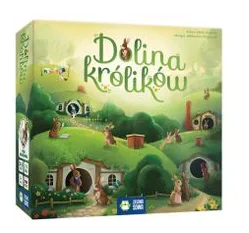
Draft dice and collect Rabbit Cards (big or small in 3 different colours: white, brown or pinto) in order to create Rabbit Families in your Rabbit Houses, remembering about genetic cross rule (e.g.
Core mechanisms
Key systems that shape the decisions players make.
Dice Rolling
Roll dice to introduce uncertainty into actions, production, movement, or resolution.
Set Collection
Gather related items that become more valuable when scored together.
Hidden Victory Points
Some scores remain concealed until a reveal or the end of the game.
Dice Worker Placement
Use dice as workers whose values affect where they can be placed.
End Game Bonuses
Earn additional points for meeting conditions evaluated when the game ends.
Read the full game description
Draft dice and collect Rabbit Cards (big or small in 3 different colours: white, brown or pinto) in order to create Rabbit Families in your Rabbit Houses, remembering about genetic cross rule (e.g. pair of Pinto Rabbits can have babies in all colours, but pair of Brown Rabbits can have only brown babies). Each player has 1 Forest Card (for all Rabbits) and 2-5 Rabbit House Cards (one House for one Family) with hidden objectives (e.g. only Brown Rabbits in Rabbit House) to be fulfilled. Players can also gain extra points e.g. for the number of rabbits in their families. Players can gain Rabbits Cards by selecting appropriate combinations of dices and can modify scores on dices by using special tokens. Game components include 51 Rabbit Cards, 16 Rabbit House Cards, 9 Forest Cards, 9 dices (D6; 3 blue, 3 orange, 3 green), Garden board, 4 Player Aid Cards and more than 80 different markers and tokens. —description from the publisher