Overview
At a glance
Is this game right for my group?
ABG editorial scores on a 1–5 scale.
Harder to teach
High replayability
Highly interactive
Scales well
Deep strategy
How it plays
How does it play?
"The goal is to collapse adversary’s system into confusion and disorder causing him to over and under react to activity that appears simultaneously menacing as well as ambiguous, chaotic, or misleading." John R.
Core mechanisms
Key systems that shape the decisions players make.
Dice Rolling
Roll dice to introduce uncertainty into actions, production, movement, or resolution.
Simulation
Model a real or imagined system through detailed cause-and-effect rules.
Hexagon Grid
Use a hexagonal map where each space connects evenly in six directions.
Zone of Control
Restrict or influence movement through areas controlled by nearby pieces.
Read the full game description
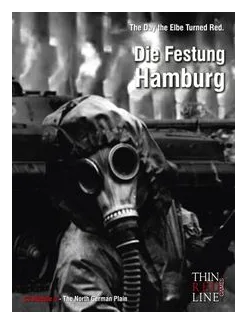
"The goal is to collapse adversary’s system into confusion and disorder causing him to over and under react to activity that appears simultaneously menacing as well as ambiguous, chaotic, or misleading." John R. Boyd, “Patterns of Conflict” At 0400 Zulu Time, July 24 1985, Warsaw Pact forces cross the Inner German Border and assault NATO positions in West Germany. The offensive in the North German Plain sector involves twelve divisions and has three main objectives: Deny NATO the access to the Baltic region, gain control of the West German ports on the North Sea, and support the advance of the Soviet armies in the BAOR sector. Taking its roots from SPI’s Central Front and NATO: Division Commander, Die Festung Hamburg is the third module of the C3 series, focused on Command, Control and Communication and pioneered by Less Than 60 Miles - one of the five nominees for the 2019 Charles Roberts Awards as Best Post-WW2, Cold War, & Hypothetical Era Board Wargame. Several typical wargame mechanics have been reinterpreted, and both sides must fight three equally dangerous foes: the enemy, their own plan and time. Even a simple action can quickly turn into a disaster when facing an opponent using more efficiently the real key to victory: the OODA Loop theorized by John Boyd in the early ‘80s and used today as the basis for several military doctrines. Military doctrine, tactics and peculiarities for each side are represented, allowing a skilled commander to use his own strength points and exploit the enemy's weak ones. Some examples are: West German Auftragstaktik (Mission-Type Orders), giving Bundeswehr a flexibility hardly obtained by other armies. Mobilization of Dutch and Danish reservists. The critical boundary between NATO's AFCENT and AFNORTH Commands. Soviet Sappers, first-line assault units used to crack the toughest nuts. Soviet Assault From March. Warsaw Pact Axis of Advance. Warsaw Pact vulnerable supply network. Game Highlights 5 km per hex, 3 hours per game turn Regiment / Battalion sized ground units Detailed Order of Battle set in 1985 Close Air Support and Attack Helicopters Command, Control & Communication related problems Electronic and Intelligence Warfare Artillery interdiction and Counter-Battery fire Chemical and Nuclear warfare Specific events for Warsaw Pact and NATO Random events to further increase battlefield chaos Two Campaign Games: "The North Stygian Plain", Warsaw Pact offensive against NORTHAG and JUTLAND sectors. "One Minute to Midnight", Unrestricted nuclear warfare after days of build-up. Four Smaller Scenarios: "Our Dearest Brothers", West German 18 Panzer Brigade defense of the Elbe - Lübeck Kanal against East German 8th Motorized Rifle Division. "The Sickle's Long Shadow", The initial attack of Soviet 2nd Guards Tank Army along the Elbe. "A Pact of Blood", West German and Danish defense of the JUTLAND sector against East German 5 and Polish 1st Armies. "The Roaring Sound of Doom", Second Echelon of Soviet 2nd Guards Tank Army assaults a still deploying Netherlands I Corps. Game Components 98×75 cm matte plasticized map, covering the Netherlands I Corps, JUTLAND Corps, and the surrounding areas. 1000+ 5/8? matte plasticized counters 41 Action and Event Cards 24 pages Rules Booklet 32 pages Scenarios & Designer’s Notes Booklet 8 pages Examples of Play Booklet 2x Tables booklets 5x Players' Aid Charts 2x 10-sided dice 10x zipbags -description from designer