Overview
At a glance
Is this game right for my group?
ABG editorial scores on a 1–5 scale.
Harder to teach
High replayability
Highly interactive
Scales well
Deep strategy
How it plays
How does it play?
Linked game discovered from BGG. Full scrape pending.
Core mechanisms
Key systems that shape the decisions players make.
Read the full game description
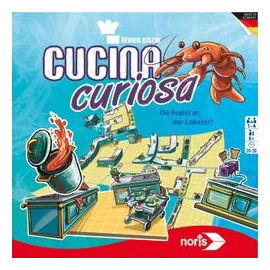
The world-famous cruiser ship Costa Curiosa is sailing the seas, and as the head chef of the Cucina Curiosa — the restaurant aboard this cruiser — your honorable job is to serve the guests the most delectable foods possible. It's the last day of the journey, and the award-winning lobsters are waiting in their aquarium for their performance. But all of a sudden, the alarm bell rings! The heavy sea tosses the ship about and mixes up all the kitchenettes. Even worse, the lobsters are able to flee from their aquarium! Catch them by getting the chaos under control, but avoid the slippery fishbones as they can quickly hold you back. Cucina Curiosa is a fast-paced tile-laying game. Every player has the same set of twenty tiles, showing kitchenettes and paths. Some of the tiles also show lobsters and fishbones. The game is played over sixteen turns. On every turn, the oldest player flips over one of his tiles, then the other players search for the same tile in their set, then everyone places the tile in his personal kitchen. Once sixteen tiles have been played, the game ends and players count their points. Every lobster that is connected to the entrance by paths is worth 1 point, but fishbones count negative for you, so you want to avoid them. The player with the most points wins!