Overview
At a glance
Is this game right for my group?
ABG editorial scores on a 1–5 scale.
Harder to teach
High replayability
Highly interactive
Scales well
Deep strategy
How it plays
How does it play?
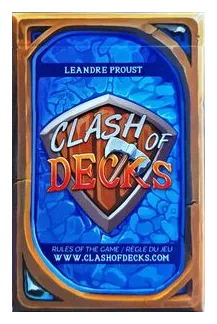
Clash of Deck is a two-player, expandable game with many twist, the biggest of which is: you buy an folded, 8-pages booklet and cut the cards off to build your game.
Core mechanisms
Key systems that shape the decisions players make.
Read the full game description
Clash of Deck is a two-player, expandable game with many twist, the biggest of which is: you buy an folded, 8-pages booklet and cut the cards off to build your game. Released on a monthly basis, the game sees the player summon creature on each side of two bridges on two different lanes and attack their opponent to try and destroy first their watchtower, and then their castle. To do so they first must dispatch opposing creatures. When a player suffers damage, they move their watchtower/castle card from left to right in their hand. If the building reaches the rightmost position, it is destroyed. Since the amount of cards in one's hand is the amount of mana the player gets at the beginning of their turn, and defeated creatures go back into your hand on the rightmost position, knowing which creature to play and which creature to let die is key to managing both your position on the board and your life total.